
A terrace is meant to be a place for relaxing and spending time together, but it’s only truly enjoyable when it feels safe and looks good. Railing system plays a big role in this – it keeps your family protected and add style to the space. The right railing can even become a design feature that highlights your home’s character and makes your terrace more comfortable to use. In this post, we’ll go over the most common types of railings, compare materials, and share tips on how to choose the option that works best for your home.
Why Are Railings So Important?
Terrace railings are first and foremost about safety. They prevent falls, which matters most on terraces above ground level. This is especially important in homes with kids or older family members. Because of that, every deck railing needs to comply with an IBC (International Building Code) regulations.
But railings do more than protect – they also shape the look of your home. The right design can completely change the style of a terrace, making it feel modern or more traditional. And when they’re well built, railings can even boost property value, much like other exterior renovations that make a home more attractive.
Types of Deck Railings
There are many kinds of railings to choose from, each with its own look, durability, and level of maintenance. Picking the right material helps you match the railing to your home’s style.
Metal railings
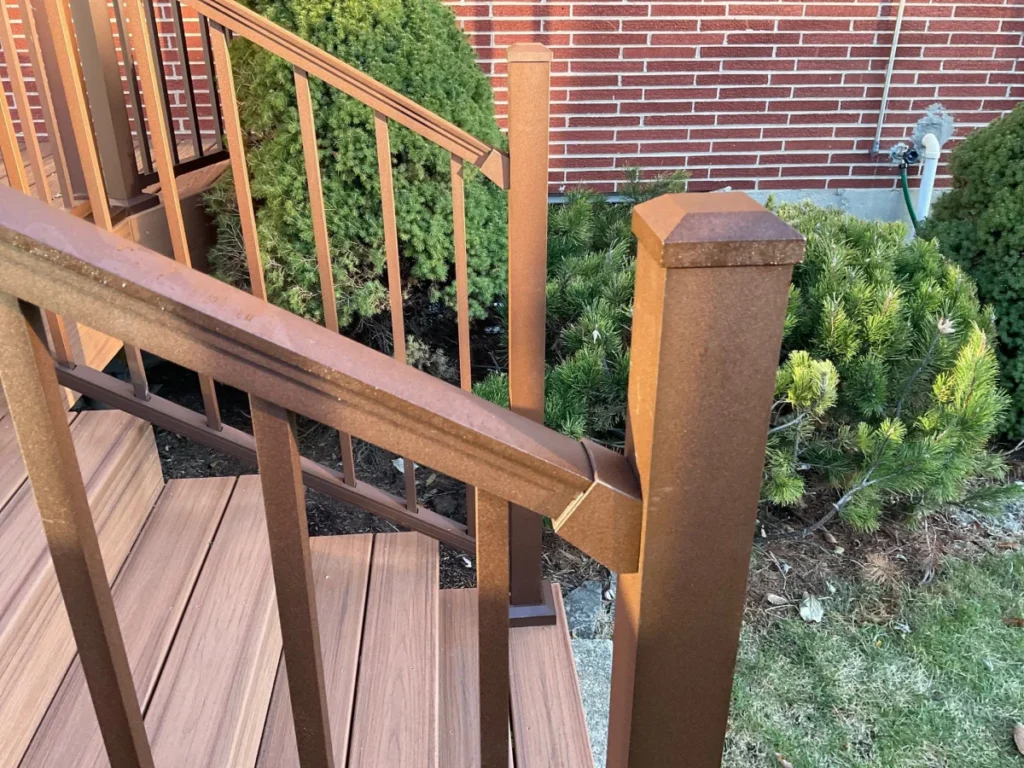
Usually made of stainless steel, aluminum, or powder-coated steel. They’re highly durable and weather-resistant, with a clean, minimalist look that fits modern designs. Keep in mind that metal can heat up in direct sun, and cheaper versions may need extra protection against rust.
At usual, aluminum deck railing system costs between $50 and $90 per lineal feet, while stainless steel railing might be more expensive, even up to $150 per lf (labor included).
Wood railings
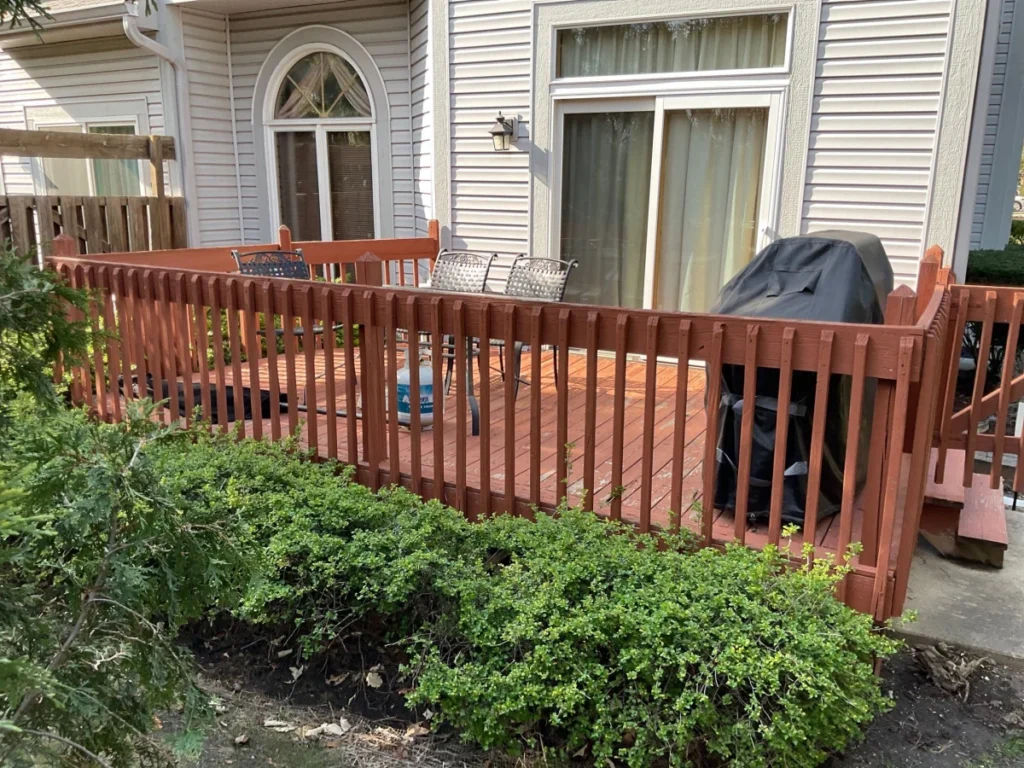
A classic choice that pairs beautifully with traditional architecture. Wood adds warmth and charm, but it does require regular sealing and protection against moisture. When considering wood, it’s also worth comparing it with composite or natural wood decking boards to keep the whole design consistent.
While wooden balusters are a fairly cheap option at the begging ($30-$50 per lf), their upkeep cost usually makes them a bad choice. If you live in a place with noticeable humidity level, such as Glenview, Illinois, wooden deck or railing is simply a bad idea.
Composite railings
Made from a blend of wood fibers and plastic, these railings offer the look of wood with less upkeep. They’re more resistant to moisture and don’t need as much maintenance as natural wood. Composite railings work especially well on composite decking boards, creating a seamless and long-lasting finish.
So-called engineered wood or composite deck railing is an affordable ($30-$60 per lf), but also aesthetically pleasing option. Being an easy to install and maintain alternative to natural wood, composite deck railings are becoming more and more popular choice.
Glass railings

Built with tempered or laminated glass, these railings give a terrace a sleek, modern style. Their biggest advantage is that they don’t block the view, making them perfect for homes in scenic locations. They do need regular cleaning, but many homeowners pair them with retractable glass patio systems for extra wind and weather protection.
Glass seems to be the most expensive among all of the railing options – at usual, you will need to pay as much as $200-$300 per lf.
Wrought iron railings
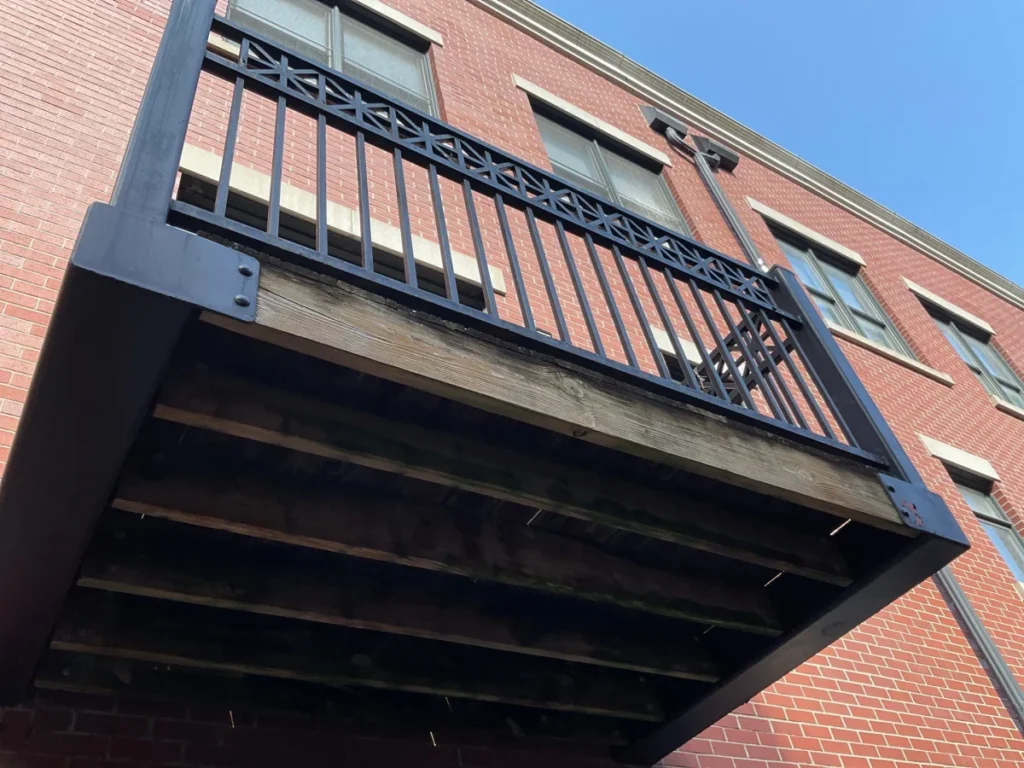
Best for those who value a classic, decorative look. Each piece can be custom-made, so it’s unique and tailored to the house. Wrought iron adds elegance but does need ongoing care to prevent rust and keep its beauty over the years.
In case of wrought iron, a lineal foot of such a railing may cost $150 as well as $500. At usual, the price will exceed $250 for sure.
Safety and Building Codes
The main job of a terrace railing is to prevent falls, which is why the United States has clear rules about when and how railings must be installed. These rules come from the International Residential Code (IRC) and the International Building Code (IBC), which most states use as a base for their own regulations.
Key requirements include:
- When a railing is required – on decks and balconies more than 30 inches above the ground or the floor below (IRC, R312.1.1).
- Minimum railing height – at least 36 inches from the deck surface to the top of the railing (IRC, R312.1.2).
- Handrails on stairs – allowed to be a bit lower, between 34 and 38 inches, measured from the stair nosings (IRC, R311.7.8.1).
- The 4-inch sphere rule – spaces in the railing must be small enough that a 4-inch ball can’t pass through, which helps keep kids safe (IBC, 1015.4).
- Apart from that, every railing product must be durable enough to withstand the puncture load of 200 lbs. All the requirements are obviously set to protect people from falling down.
These details may sound technical, but the goal is simple: to keep people safe. By following code, your railing not only looks good but also does what it’s meant to do – protect everyone using the terrace.
How to Match Railings to Your Home’s Style?

Railings should meet safety standards, but they should also fit the look and feel of your home. For modern houses, sleek stainless steel, aluminum, or glass railings work well, highlighting clean lines and a light, open design. In more traditional homes, wood or decorative wrought iron railings create a warmer, classic charm.
Color and finish also matter. A railing should blend with the siding or decking tones. Some materials give you more flexibility – for example, fiber cement siding can be repainted, making it easier to coordinate with the railing and the rest of the exterior. On the other hand, it’s worth looking for a low maintenance options, so the color you choose should look good not only when being brand-new, but also after some time.
In the end, a railing isn’t just about safety. It’s part of your home’s overall design. When all the details come together, the terrace feels cohesive and stylish, no matter the architectural style.
Costs and Budget – How Much Do Deck Railings Cost?
You already know that some material options are considered as affordable, while others seem to be maintenance-free or more durable. In fact, despite the material cost, you need to be also aware of labor prices. Only if you take them into consideration, you will be able to make an informed decision.
- Wood railings – while the wooden balusters are fairly cheap, their installation cost may surprise you. It’s mainly because this process, apart from installing, requires painting or staining. At the end of the day, $60 or $100 per lf of wooden railing is a common price, especially in Chicago suburbs.
- Metal railings (steel, aluminum) – more expensive than wood but far more durable. Aluminum doesn’t rust, and stainless steel can last for decades with little upkeep. Metal railings, especially made of aluminum, may cost similar to wood. As their installation process is easier, some homeowners may be able to pay as little as ~$40-$50 per lf including labor.
- Composite railings – higher upfront cost than wood, but they resist moisture and mold and require very little maintenance, which saves money in the long run. The final cost of composite railing installation is usually similar to aluminum.
- Glass railings – a premium option. Both the material and installation cost more, but they deliver a light, modern look that other materials can’t match. Because of its weight and fragility, glass is the most expensive material for residential decks. In Chicago, people often pay for it as much as $500 per lf, especially if the deck is located on a high building’s roof.
- Wrought iron railings – usually also very expensive. They’re custom-made, unique, and elegant, but they need regular treatment to prevent rust. At usuall, wrought iron deck railing costs at least $220-$270 per lf.
Overall, every material has trade-offs. The cheapest option at the start may not be the cheapest after 10 or 15 years. Looking at both purchase price and long-term care helps you choose a railing that fits your budget without surprises later on.
What About Functionality and Maintenance?
A railing should look good, but it also has to be easy to use and care for. The material you choose decides how much upkeep it will need year after year. Just like with insulation materials, durability and resistance to weather are key.
Maintenance by material:
- Wood – needs regular sealing and painting to protect against moisture, mold, and insects. Without care, it can quickly lose its look and strength.
- Metal – stainless steel and aluminum resist rust and need little upkeep. Painted steel lasts too, but the coating has to be refreshed now and then.
- Composite – one of the easiest to maintain. A quick rinse with water is often enough to keep it looking new.
- Glass – strong and weatherproof but shows dirt easily. Needs frequent cleaning, especially if the deck is near a garden or busy street.
- Wrought iron – solid and stylish, but it must be treated regularly to prevent rust, especially in humid climates.
Not every material requires the same effort. If you want a low-maintenance option, aluminum and composite are your best bets. Wood and wrought iron add charm, but they also demand more time and care to stay in good shape.
Additional Elements and Roof Terraces
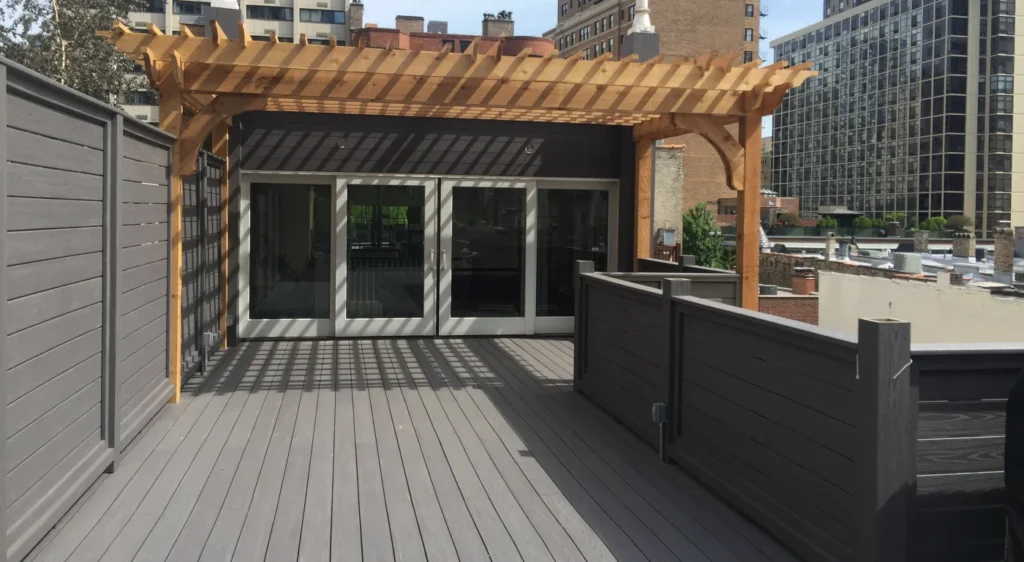
A terrace’s functionality depends not only on railings but also on other finishing touches. A good water drainage system is essential — well-designed gutters protect the structure from moisture and help it last longer. Many homeowners also add modern glass features, which let you enjoy the terrace in any weather while keeping the space open and bright.
Roof terraces need even more attention. Here, railings play a critical safety role. The structure has to be solid and meet building codes. That’s why it pays to rely on proven solutions and expert planning when designing a rooftop deck.
Summary
A terrace railing brings together safety, style, and everyday use. The right choice not only keeps your family safe but also highlights your home’s character and can even boost its value. Whether you go with wood, metal, glass, composite, or wrought iron, the key is to match the railing to your home’s style and your needs. That way, your terrace will stay comfortable, safe, and attractive for years to come.