
Synthetic roofs such as DaVinci and Brava are often marketed as durable, attractive, and built to handle harsh weather, but that does not mean a storm-related insurance claim will always be straightforward. In areas like Illinois, where hail, high winds, and sudden weather shifts are common causes of roof damage, the problem often starts not with the damage itself, but with how the insurance company evaluates it. After a storm, the dispute may involve more than whether the roof was damaged at all — it may also come down to whether the damage is considered functional, whether a partial repair is enough, and whether the roof can still maintain a consistent appearance afterward. That is exactly why synthetic roofs so often lead to more complicated insurance claims than standard roofing materials.
Table of Contents
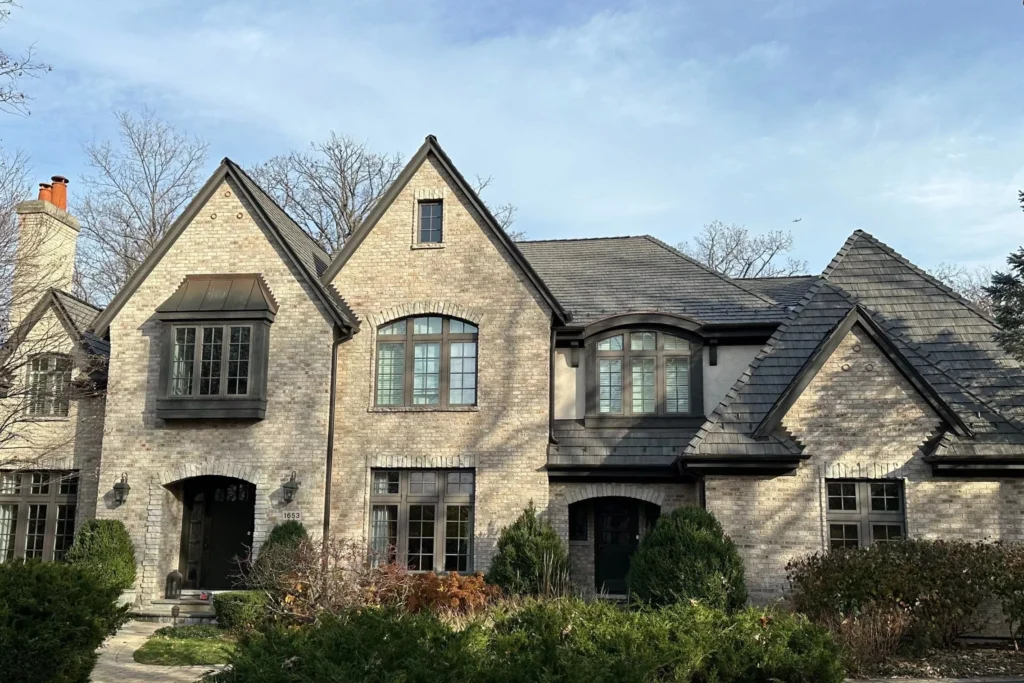
Why Synthetic Roof Storm Damage Is Hard to Evaluate
Storm damage on synthetic roofs such as DaVinci or Brava is often harder to assess than damage to more traditional roofing materials. That difficulty does not come from the roof being weaker, but from the fact that the damage is often less obvious. With asphalt shingles or metal roofing, cracks, dents, or missing sections are usually easier to spot, while composite materials may suffer from more subtle surface damage, internal stress, or structural weakening that cannot always be reliably identified during a quick post-storm inspection.
That is why, in Illinois, the visibility of the damage alone is not always enough to determine the outcome of a claim involving a synthetic roof. The quality of the documentation, the way the claim is reported, the technical performance of the roofing material, and whether the damage is treated as cosmetic or as a real issue affecting the roof’s function can all play a role.
In a state regularly hit by hailstorms and strong winds, that difference in interpretation can directly affect how broadly or narrowly an insurer chooses to cover the repair.
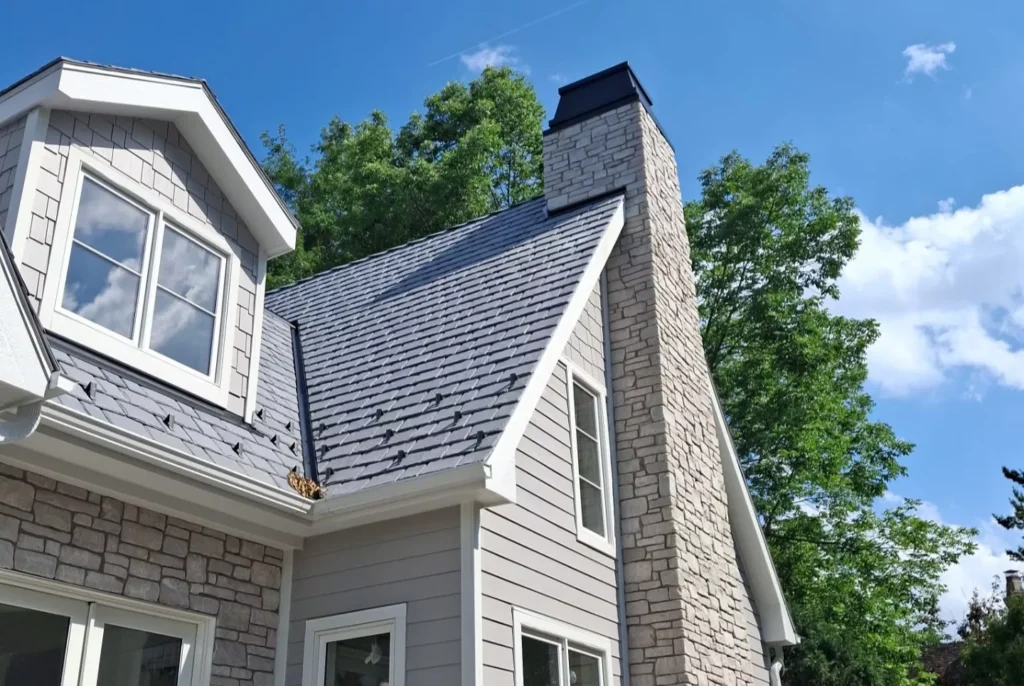
Cosmetic vs Functional Damage on Synthetic Roofs
One of the more common problems in a homeowners insurance claim involving a roof is that the same storm damage can be interpreted very differently by the homeowner and the insurance company. Proving functional damage on synthetic roofing materials is often harder—and more expensive—than it is with traditional roofing materials.
For example, when a roof is covered with asphalt shingles, missing pieces, cracks, or obvious distortion are usually easy to spot. But on DaVinci Roofscapes or Brava roof tile products, the issue may involve more subtle forms of damage. Small edge fractures, surface weakening after hail, stressed connection points, or defects that seem minor at first glance can all make the roof much harder to evaluate. That is one reason why a quick visual inspection after a storm is not always enough when a home has premium roofing rather than more familiar traditional roofing materials.
In practice, the dispute often comes down to whether the roof needs a closer inspection, expanded photo documentation, moisture testing, or even an independent engineering opinion when the homeowner and insurer disagree about the condition of the roofing material. The Illinois Department of Insurance notes that when there is disagreement over the extent of damage or whether a building can be repaired, an additional expert opinion may be needed—and that cost is not always covered up front by the insurer. At the same time, the UL 2218 Class 4 impact standard shows why specialized impact testing can matter so much in roofing claims, especially when hail damage does not leave behind the kind of visible evidence a roofer or adjuster would expect to see on asphalt shingles.
In places like Illinois, where strong storms, hail, and wind test the wind resistance, durability, and long-term longevity of a roof, this stage of the claim can make all the difference. It may determine whether the damage is treated as a real performance issue that supports broader repair or even roof replacement, or whether it is reduced to a cosmetic concern with limited warranty coverage implications.
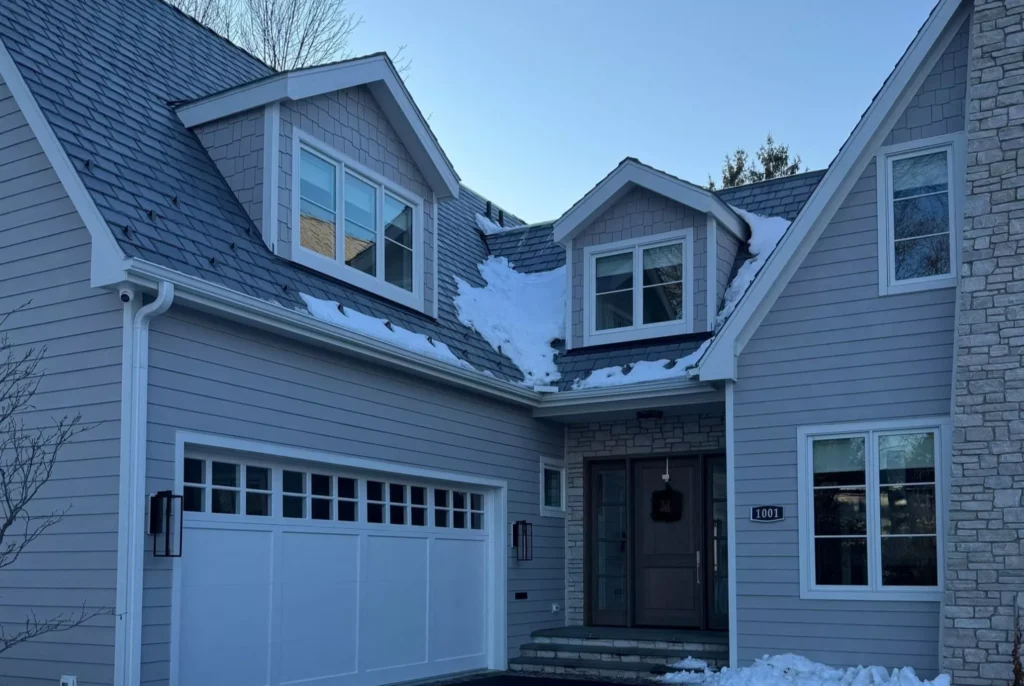
Why Partial Repairs Are Common on Synthetic Roofs
When a homeowner files a homeowners insurance claim after storm damage, insurers often push for a limited repair instead of broader roof replacement—and that happens especially often with synthetic roof tiles like Brava roof tilesystems and DaVinci Roofscapes. With this kind of premium roofing, the carrier can narrow the claim to the sections with visible hail or wind damage and argue that the rest of the roof is still serviceable. That approach is much harder to defend with asphalt shingles, where missing pieces, cracking, and obvious distortion are easier to identify, but on a synthetic system, a small visible defect may not reflect the full extent of the damage.
That is exactly what makes partial repair so attractive to the insurer and so frustrating for the homeowner. A quick inspection may focus only on the most visible impact points, while more subtle issues—surface weakening, stressed seams, loosened fastening points, or reduced wind resistance—are left out of the claim. On Brava roof tile products and DaVinci Roofscapes, the insurer may say only the directly affected area needs work, even if the broader system has lost some of its long-term durability or longevity. This is one reason why documentation matters so much.
Partial repair can also create a second problem that is especially common with synthetic systems: matching. A new roof tile may not blend with older sections in profile, finish, weathering, or overall aesthetic appeal, leaving the home’s exterior with a patchwork look even after the work is “completed.” For a roofer familiar with specialty roofing, that is not a minor visual issue—it can affect the integrity of the system, future warranty questions, and even broader warranty coverage concerns if the repaired area performs differently over time. That is why insurers so often prefer partial repairs on synthetic roofs: they are cheaper, easier to justify from a narrow claim perspective, and harder for the average homeowner to challenge without outside documentation.
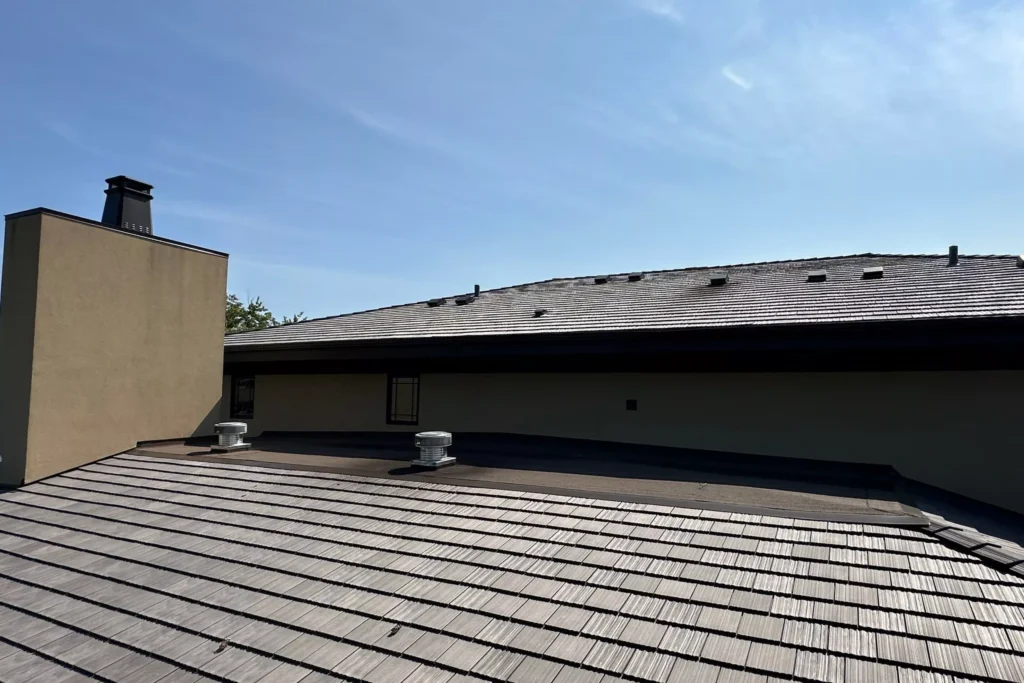
My Slate Roof was Damaged in a Storm—What Should I do?
So what should you do once you notice that your roof has been damaged by a storm? There are several important guidelines you should follow to increase your chances of having your claim approved by the insurance company. Below, we’ll outline the specific steps you should take:
1. Document the damage immediately
The most important thing in this situation is to document the damage as thoroughly as possible. Try to take photos of the roof from various angles, both from a distance and up close. Pay special attention to areas where damage is visible. All cracks, dents, and shifts should be photographed from every possible angle.
If you suspect that the roof may have more extensive, less visible damage, use a drone if possible. Such photos can serve as strong evidence in disputes with the insurer, as they show the scale of the damage more objectively than close-up photos.
2. Do not make repairs before documenting the damage
A common mistake some homeowners make is starting repair work immediately without first compiling a complete record of the damage. Doing so can obscure evidence of the damage and make it harder for you to receive the insurance payout you’re entitled to. If you are forced to secure the roof (e.g., to prevent leaks), do so, but document the entire process thoroughly—try to take photos and record videos both before and after securing it.
3. Save samples of damaged roof tiles
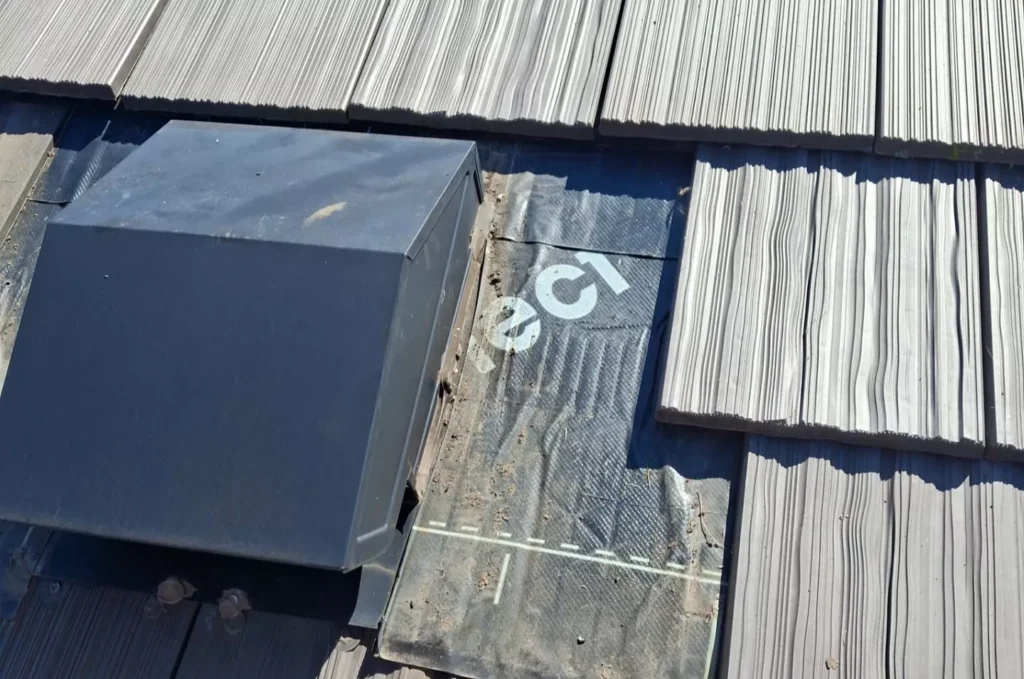
Another mistake roof owners often make is throwing away detached roof components. Every fragment of a broken roof tile serves as valuable evidence in the claims process. The best approach is to immediately take photos showing where the fragment was originally located and where it ended up after breaking off.
4. Report the damage and immediately specify the type of roofing
Reporting the damage is an obvious part of the entire process, but you need to know how to do it correctly. The general rule here is to describe the problem in detail so that the insurer immediately understands the broader context of the situation. Simple descriptions such as “damaged shingles” or “cracked shakes” should be avoided, as they can imply any type of roof and any type of damage.
In the claim, you should immediately state that the damage is related to a synthetic roofing system, not just ordinary “roof shingles,” and that it is a premium system where the shingles are part of a single cohesive system, not loose components. Note that in such systems, matching (color, profile, texture, material aging) is of critical importance (it’s worth doing this regardless of whether your policy includes a provision regarding the uniform appearance of the roof—more on that later).
Keep in mind that you want to suggest to the insurer that the problem concerns the entire system, not just isolated damage; the damage assessment should take into account the aesthetics and integrity of the system, not just visible cracks.
In addition, request an inspection that takes into account the specific characteristics of synthetic roofs, rather than a standard assessment like the one used for asphalt shingles—ideally conducted by someone who is knowledgeable about various roofing solutions, including synthetic ones.
5. Hire an independent roofer or contractor
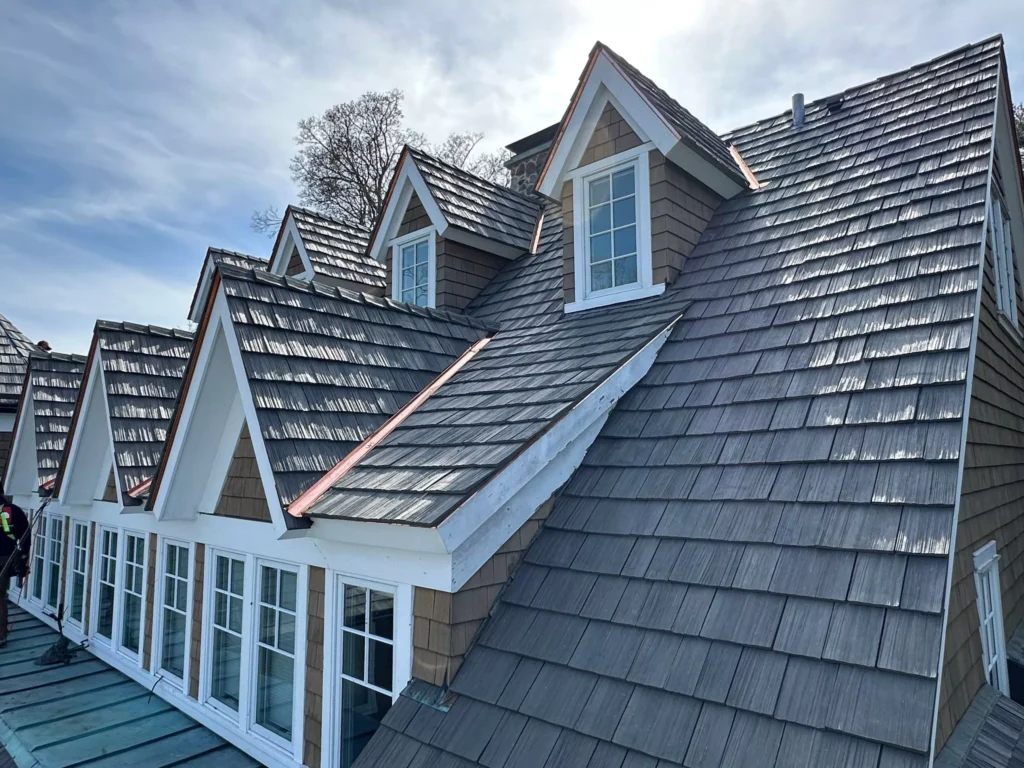
While not mandatory, hiring a professional contractor to prepare an additional technical report can be very helpful. Such a document will be unbiased and provide an accurate assessment of the situation.
This step is strongly recommended in the event of a dispute with the insurer. If you are not satisfied with the proposed settlement, the opinion of an independent specialist will be essential to continue the dispute.
6. Check the terms of your policy
Specifically, the provisions regarding the matching endorsement—that is, whether it guarantees a uniform roof appearance. If so, that’s excellent—it constitutes a binding legal requirement that compels the insurer to consider material matching when paying out the claim.
However, if your policy does not include such a clause, your claim regarding a breach of the system’s uniformity is merely a technical and practical argument, demonstrating that a partial repair does not restore the roof to its pre-damage condition, creates an inconsistent appearance, and may affect the property’s value and the system’s functionality. For this argument to be more effective, it should be based on the opinion of an independent roofer.
Regardless of the policy, this issue is definitely worth raising—though keep in mind that the outcome may vary.
The Importance of Good Insurance
To make things easier for yourself in a critical situation like damage to a synthetic roof, you should think about getting the right insurance policy right from the start. Many owners of premium roofs make the same mistake—they purchase standard insurance, thinking it will cover them in every situation. However, synthetic roofing systems have specific characteristics that require appropriate protection.
When choosing an insurance policy, look for the following elements:
Replacement Cost Value (RCV)
One of the key differences in coverage is between RCV and Actual Cash Value (ACV). Replacement Cost Value (RCV) means that the insurance is intended to cover the cost of replacing or repairing the roof based on current material and labor costs, whereas ACV deducts depreciation and the age of the roof. If you were to choose an ACV policy for an expensive synthetic roof, the payout could be much lower, and you would have to pay hundreds of dollars out of your own pocket.
Provisions regarding matching / uniform appearance
These are the previously mentioned clauses obligating the insurer to ensure a uniform appearance of the roof after repair. Thanks to them, you will be able to argue that simply replacing a few shingles is not enough if the new elements differ in color, profile, texture, or degree of wear from the rest of the roof.
Cosmetic damage exclusion
This clause means that the insurance does not cover damage deemed purely cosmetic and not affecting the roof’s functionality. In the case of synthetic roofing, this is particularly disadvantageous, as damage (e.g., from storms or hail) is often subtle and it is more difficult to demonstrate its impact on the system’s durability or watertightness.
FAQ: Brava and DaVinci, Synthetic Tiles, Installation, and Storm Claims
Are Brava and DaVinci good options for homes in Illinois?
They can be a strong choice in Illinois because they are designed to handle demanding weather and offer a more low-maintenance alternative to materials like natural slate or cedar. For many homeowners, the biggest advantage is getting the look of a higher-end exterior without choosing heavier products.
Can storm damage on Brava and DaVinci be harder to document?
Yes. With synthetic tiles, damage is not always as obvious after hail or wind, which is why detailed photos and a careful inspection matter so much. In many claims, the dispute starts because subtle damage is easier to miss during a quick review.
Do Brava and DaVinci products work well as a slate roof alternative?
Yes. Many homeowners consider them when they want the appearance of a slate roof without the weight and upkeep that can come with natural slate. That is one reason these systems are often chosen for upscale exterior upgrades.
Why does installation matter so much with synthetic roofing materials?
Proper installation has a major impact on long-term performance. Even strong synthetic roofing materials can become more vulnerable if fastening, alignment, or detailing is not handled correctly from the start.
Should a homeowner keep manufacturer documents after installation?
Absolutely. Product specifications, invoices, and any manufacturer warranty documents can be very helpful later, especially if there is a disagreement about product condition, storm impact, or expected performance.