
One part of the North Shore that you simply can’t pass by without noticing is the prestigious Lake Forest, which truly captivates with its architectural cohesion and abundance of greenery. This luxurious town is one of the most expensive real estate markets in the area, with an average home price of $1,217,724—more than twice the U.S. national average. What makes Lake Forest unique, and what kinds of homes can you find there? We’ll cover that in this article.
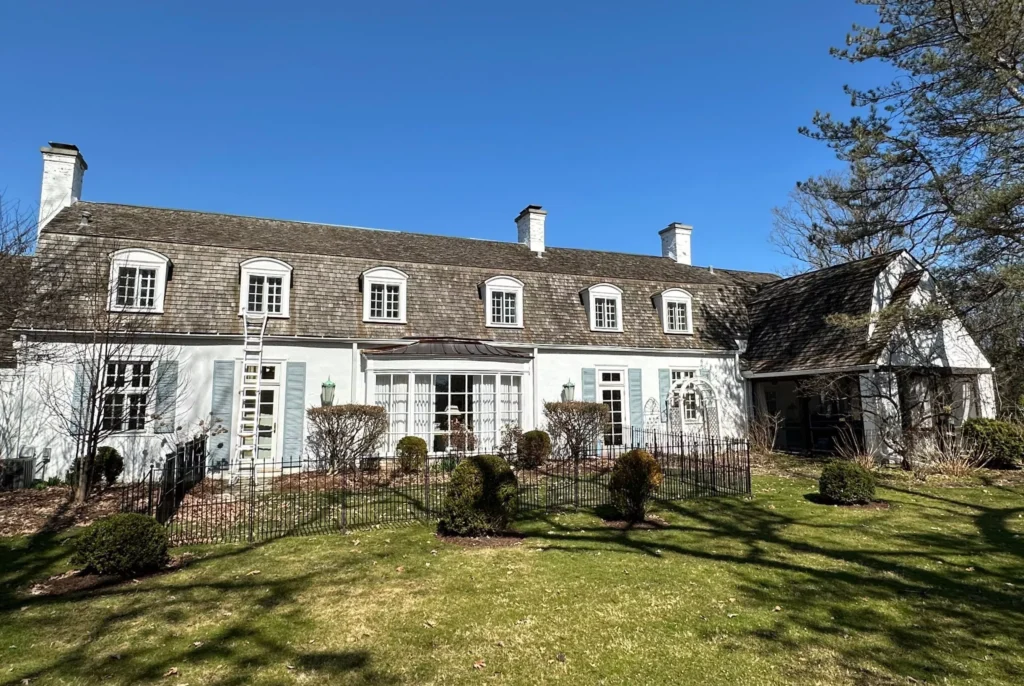
The History of Lake Forest
The history of Lake Forest is quite unusual compared to other American cities and towns, as it did not develop spontaneously but was, from the very beginning, a well-thought-out project that continues to fulfill its original purpose to this day.
Before 1850, the area that is now Lake Forest was a vast forest crisscrossed by a few Native American trails, mainly used by the Potawatomi, the indigenous tribe of that region. The only feature in the area of significance to settlers at that time was the Green Bay Trail—a trade route connecting the area around present-day Chicago with the north (Wisconsin)—which had begun construction as early as the 1830s. However, it did not run through Lake Forest itself, but only nearby, which did nothing to increase the area’s importance.
The situation changed in the 1850s, when a group of influential individuals in the rapidly growing city of Chicago sought to establish an entirely new settlement—one that would be elite, peaceful, and orderly. The new town, named Lake Forest, was to feature spacious lots, abundant greenery, and a community founded on education, religion, and social discipline.
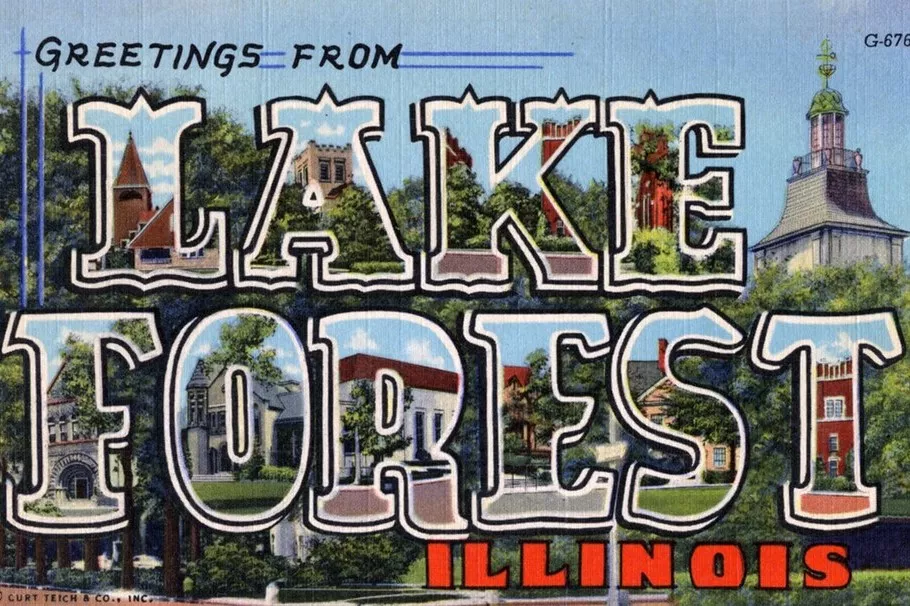
This group was called The Lake Forest Association and consisted of members of Chicago’s elite. It included wealthy entrepreneurs, clergy (mainly Protestant), educated intellectuals, and real estate investors. They began buying up land along Lake Michigan en masse, after which they established a strictly defined development plan. Lots were sold only to those who fit the project’s criteria.
A key factor contributing to the project’s success was the opening of Lake Forest College in tandem with the establishment of the city plan in 1857. The presence of the college immediately enhanced the city’s prestige and attracted the desired demographic of residents. Over the years, Lake Forest developed according to plan—dense and high-rise development was strictly limited, and the town attracted only affluent Americans who built enormous, luxurious mansions. This state of affairs has persisted to this day, as the tiny town continues to maintain its status as an enclave of luxury and sophisticated architecture.
Architecture in Lake Forest
As we mentioned earlier, Lake Forest’s urban plan was carefully designed from the very beginning. The entire city consists of vast lots featuring opulent residences and private parks or forests. To see the difference between Lake Forest and other cities, you need only look at a map and the street layout. While neighboring Lake Bloomfield and Highwood feature a classic grid street pattern, Lake Forest stands out with its curvilinear street pattern.
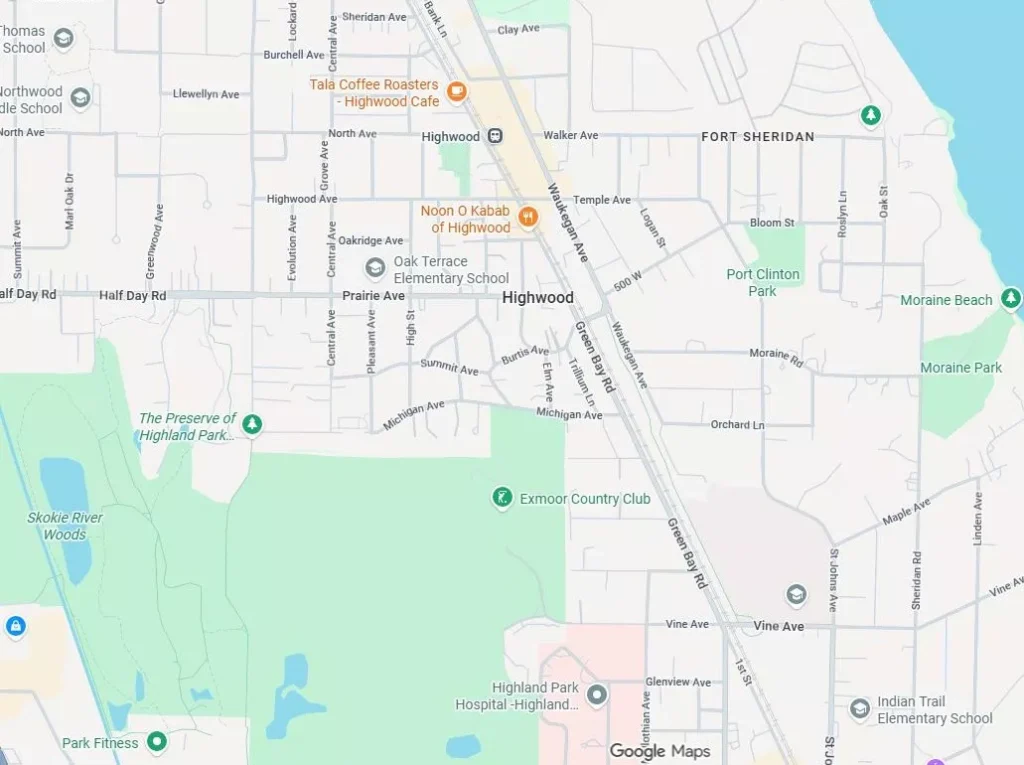
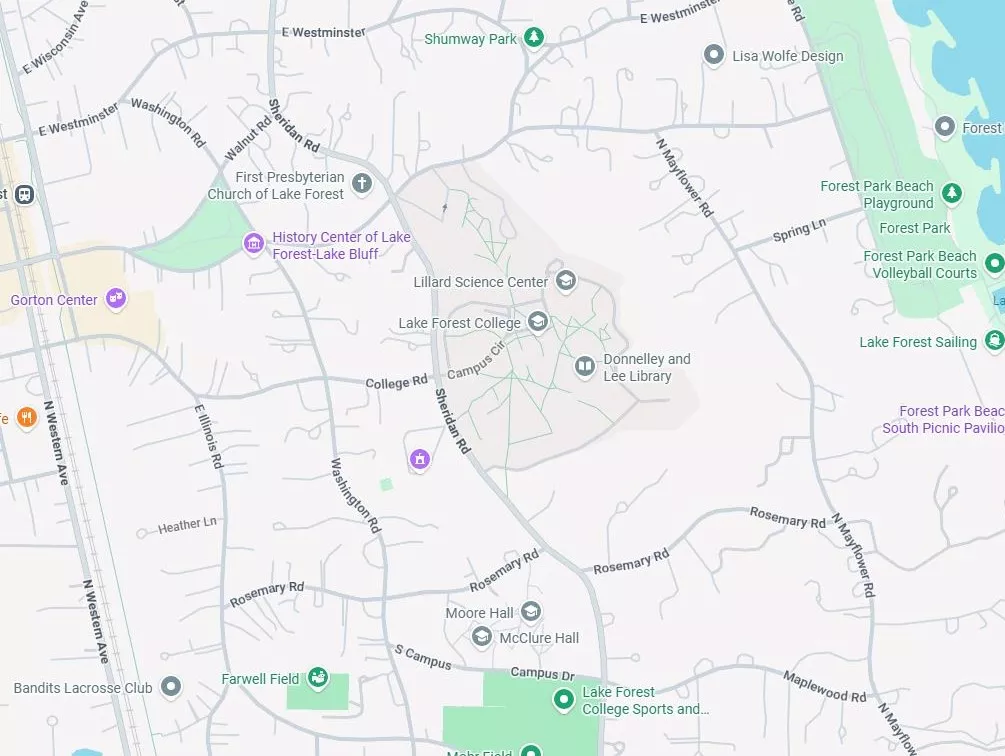
As a result, the spaces between the houses can remain large, leaving room for the ubiquitous greenery that is an integral part of the area’s landscape.
Of course, walking through the streets of Lake Forest, you can also feel this difference. Here, the houses aren’t lined up one after another along the street as is usually the case; often, only parts of them peek out from behind bushes or trees. This creates the impression that the houses aren’t the main feature of the town, but rather a complement to a vast, lush park. This is precisely the intended outcome of the Lake Forest Association’s project—the architecture here was not subordinated to maximizing the use of the lots, but was designed to help create a harmonious landscape that conveys a sense of luxury and stability.
The Most Important Architects of Lake Forest
Howard Van Doren Shaw
One of the most important figures in the development of Lake Forest was Howard Van Doren Shaw. Born in Chicago, this architect had very strong ties to the region, having designed many buildings on the western shore of Lake Michigan.
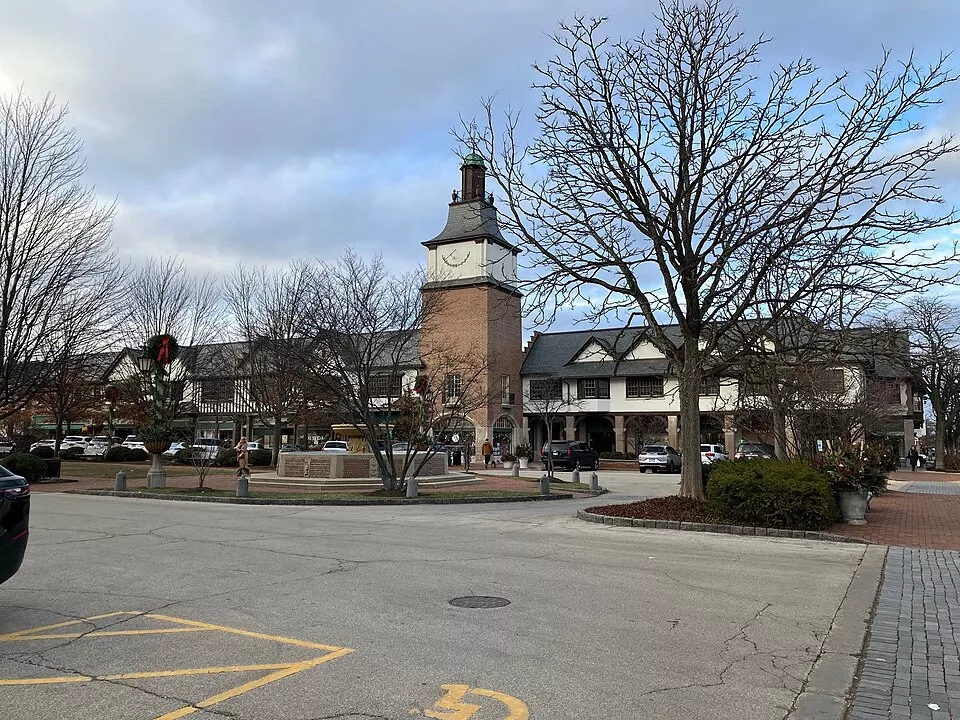
His most significant work for Lake Forest is undoubtedly Market Square, the first planned shopping center in the U.S.—a highly innovative concept, since previously, in American cities, stores and commercial buildings were constructed gradually by different owners, which always resulted in haphazard development. Market Square was designed as a unified whole from the very beginning, giving the place a unique character and making even Lake Forest’s shopping street an integral part of the city’s architectural identity.
David Adler
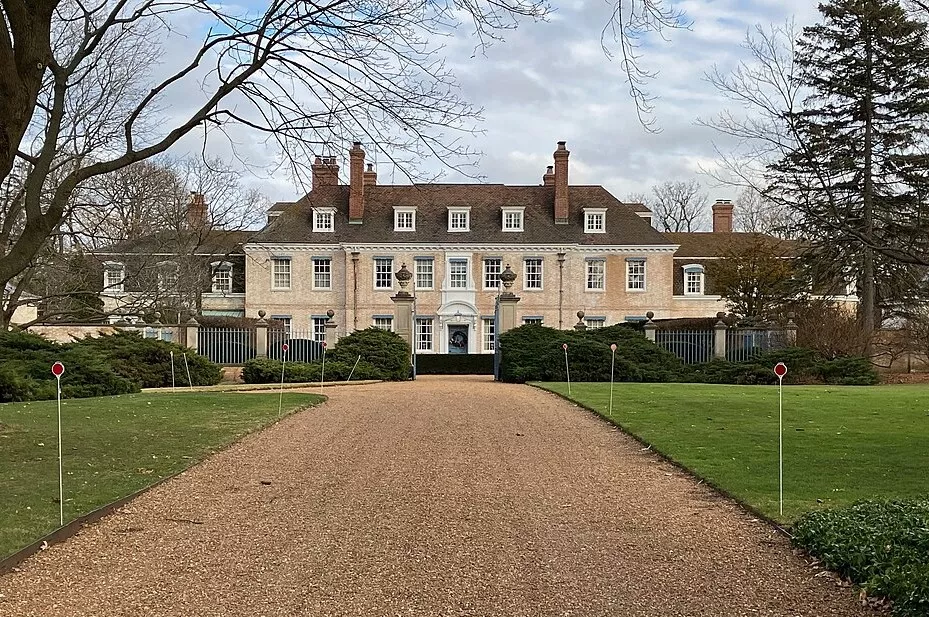
David Adler is considered one of the most outstanding residential architects of the first half of the 20th century, and he developed his career largely in Lake Forest. Through his work, he played a key role in shaping the city’s image as a luxury enclave filled with breathtaking residences. One could even say that, in his day, he was the favorite architect of wealthy families who wanted to build a home in Lake Forest. It’s no wonder—his designs were grand and exuded opulence.
Frank Lloyd Wright
Frank Lloyd Wright is a figure well known throughout the North Shore. Although he didn’t build as many homes in Lake Forest itself as Van Doren Shaw or Adler did, the Prairie School style he created fit perfectly with the character of the city. The homes Wright built placed great emphasis on harmony with their surroundings, which worked perfectly for the private parks of Lake Forest property owners.
Architectural Styles in Lake Forest
Lake Forest is famous for its remarkable residential architecture—that is, the design and construction of luxurious and stately homes. Most of the homes in this city were built between the late 19th century and the first half of the 20th century, which is why historical styles inspired by European culture predominate among them.
Tudor Revival
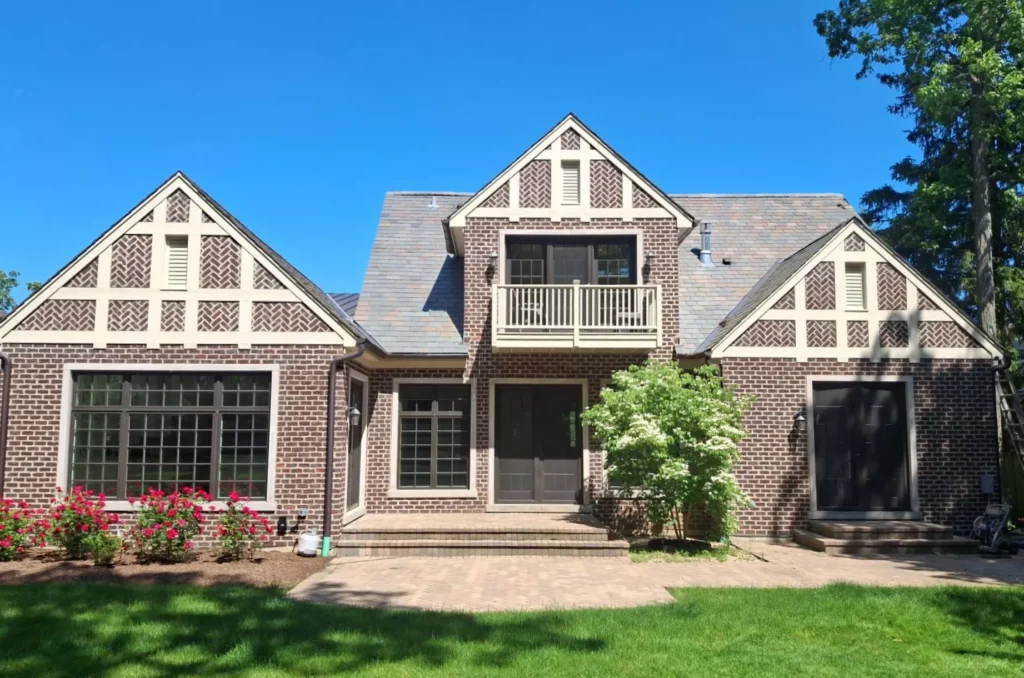
The Tudor Revival style draws inspiration from 16th- and 17th-century English manor houses and is characterized by, among other things, steep roofs, decorative half-timbering, and tall chimneys.
Georgian Revival
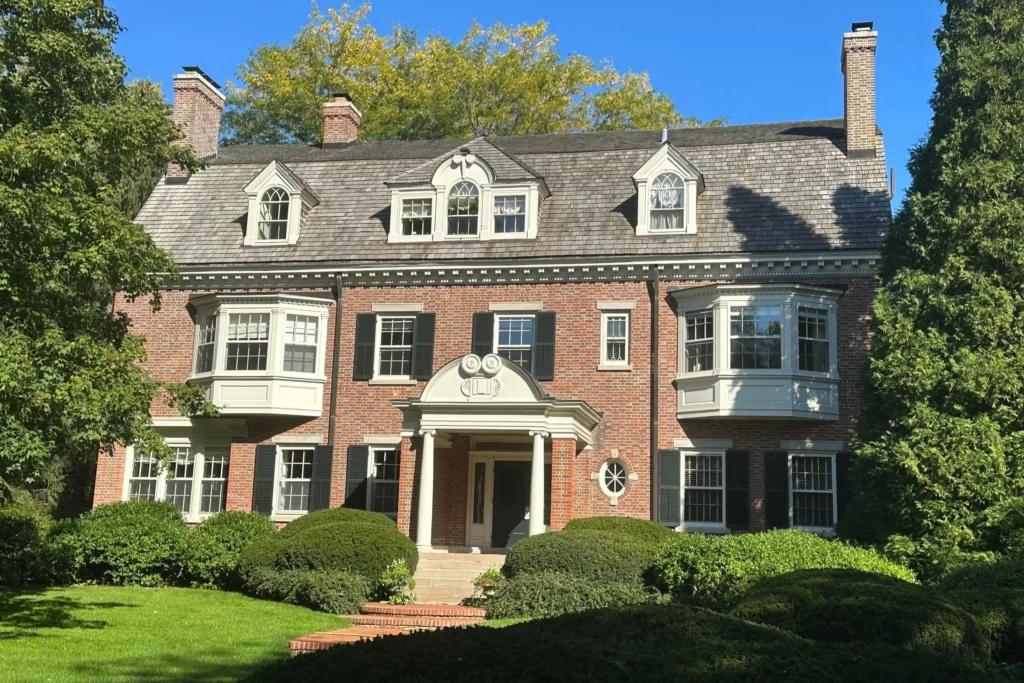
Georgian Revival is a classic, very elegant style, particularly popular among Lake Forest’s wealthiest residents. The homes here resemble manor houses fit for the aristocracy. Georgian Revival is characterized by perfect symmetry, brick facades, grand entrances with columns or pilasters, and natural slate roofing. It was this style that David Adler chose most often.
Colonial Revival
In Lake Forest, you can also find examples of the Colonial Revival style, which is extremely popular on the North Shore. Although slightly less imposing than the Georgian Revival, it is just as elegant. It is characterized by simple, symmetrical forms, wooden shutters, often columned porches, and wooden roofing.
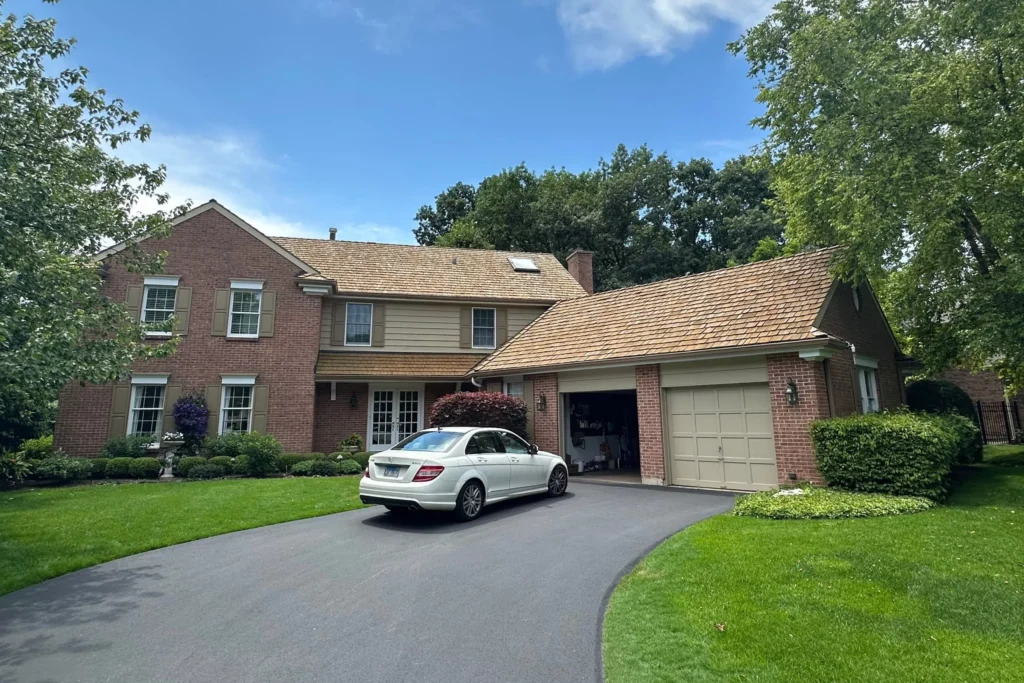
French Eclectic / French Château
A very interesting architectural style found in Lake Forest is French Eclectic / French Château. These homes are inspired by French castles and manors and are a rarity throughout the North Shore.
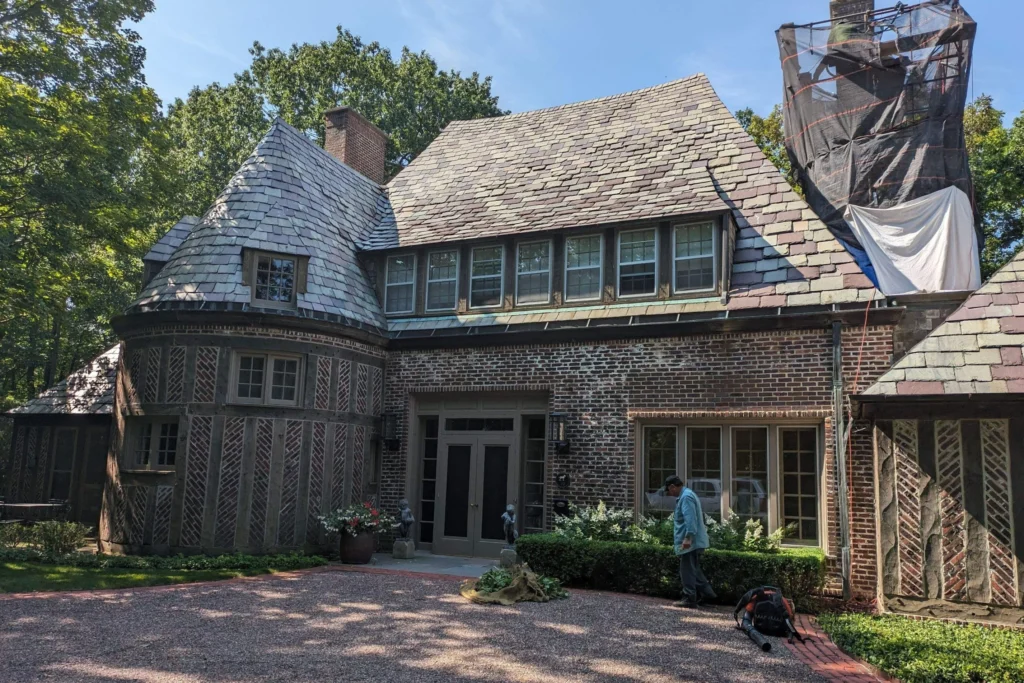
Arts and Crafts
Another very unique style is Arts and Crafts, a British artistic and architectural movement that, in its essence, opposed the Industrial Revolution. It promoted a return to traditional craftsmanship, natural materials, and simple, functional forms inspired by nature and folk art—which is often the source of elements such as wooden roofs. It was popularized by Howard Van Doren Shaw.
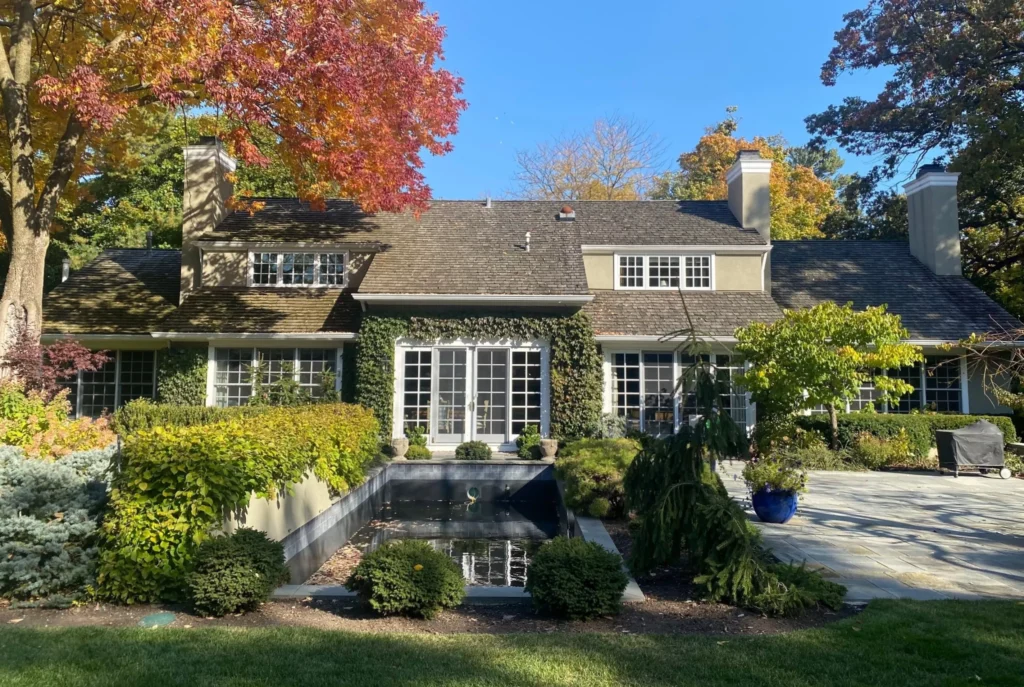
Prairie School
The Prairie School, mentioned earlier, is a style devised by architect Frank Lloyd Wright. It is not the dominant style in Lake Forest, but one can find both classic examples of the Prairie School and other buildings inspired by its philosophy.
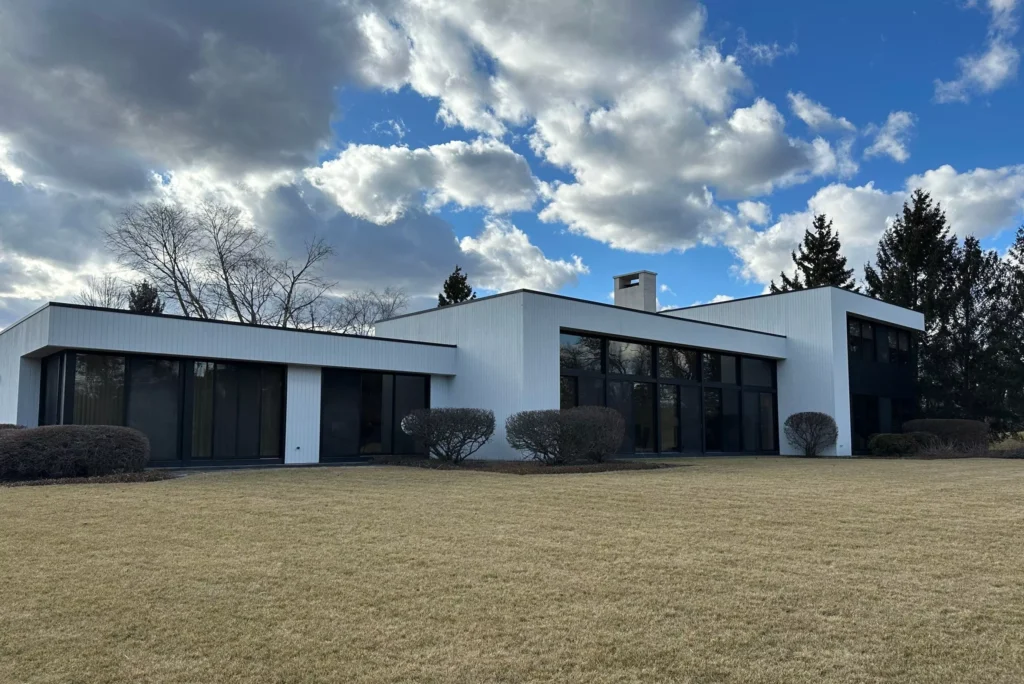
Mid-Century Modern and Contemporary
In addition to all the historical styles mentioned above, Lake Forest also features newer homes built after World War II. These homes are characterized by large windows, flat or low-pitched roofs, and open floor plans. While they do not make up the majority of the housing stock, they are certainly easy to recognize.
Real Estate Prices in Lake Forest
Right at the beginning of this article, we mentioned that the average home price in Lake Forest is $1,217,724. And while the average can often be inflated, in this small town with fewer than 20,000 residents, it accurately reflects market conditions.
As of July 2026, there are just under 60 homes listed for sale. Listing prices start at around $700k, but they quickly soar to over $1 million. There are a few properties listed for less than a million, mostly in classic or modern styles with 3 to 4 bedrooms. However, these are homes on smaller lots, situated along the road. If you’d like to buy a home on a large lot, you’ll have to be prepared to spend more.
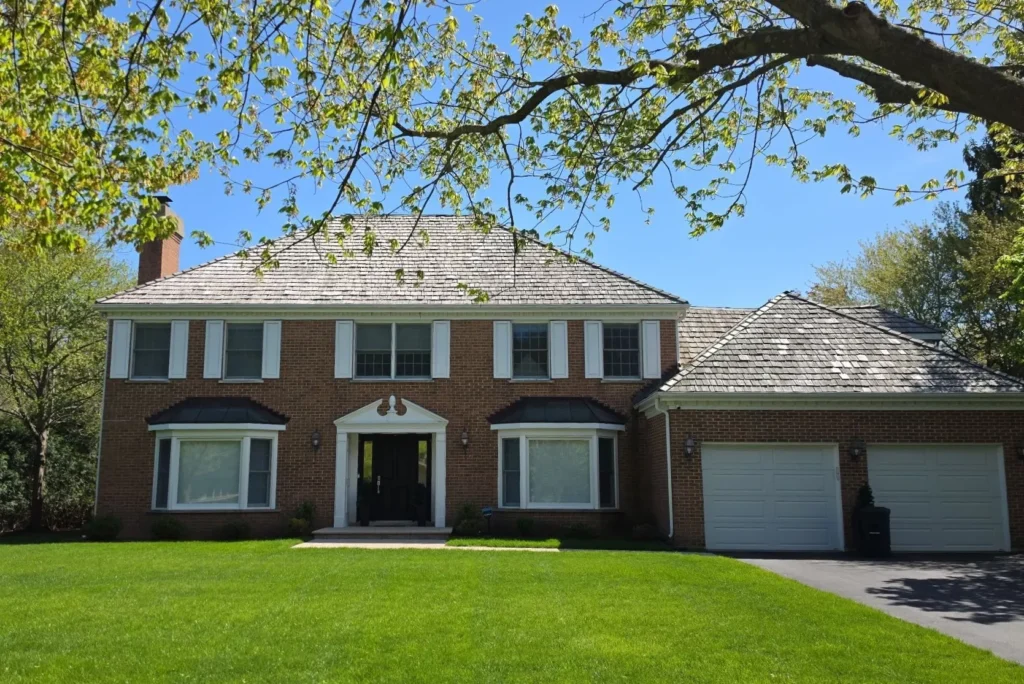
A million-dollar House in Lake Forest, Il.
For about a million dollars, you can buy a very large house in Lake Forest, complete with a large lot of up to 0.5 acre. Such a house, typically in the Traditional Suburban style, will have 3 to 4 bedrooms and 2 to 3 bathrooms.
More interesting listings start at half a million more—this budget allows you to purchase homes in historic styles, such as Colonial Revival or Georgian Revival, with much larger lots, exceeding even 1 acre.
A $2 Million House in Lake Forest, Il.
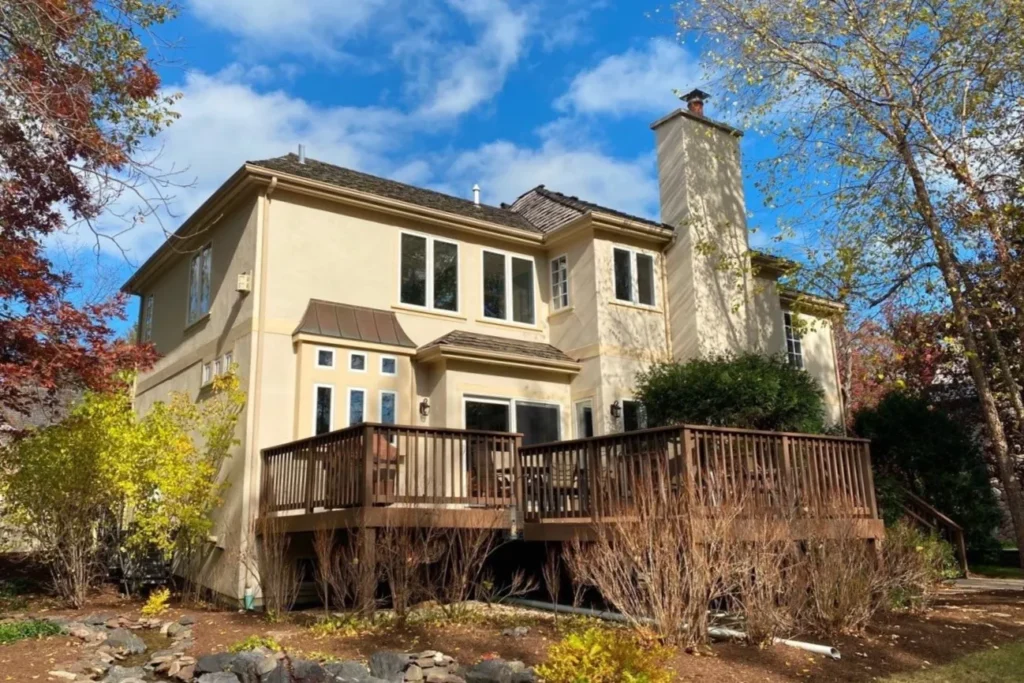
A budget of two million dollars allows you to purchase even more impressive homes in Lake Forest, featuring multiple bedrooms, large lots, and a variety of architectural styles.
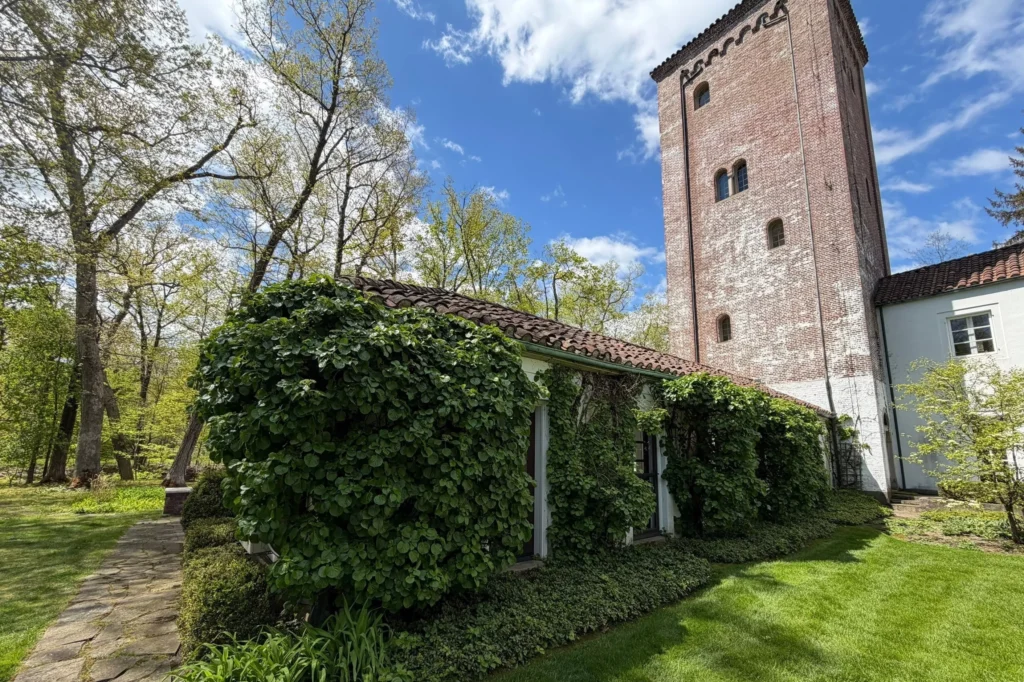
A particularly interesting example, unique throughout the entire North Shore, is a home currently listed for approximately $2.5 million, designed by David Adler in 1928. This Italianate -style home features its own tower straight out of an Italian town. It has as many as five stories, housing bedrooms and bathrooms, including a Byzantine-style room—a space adorned with original frescoes depicting Greek gods, painted by the renowned Russian émigré artist Nikolai Remizov, which have been preserved to this day. This room is one of the few surviving examples of his mural work in the United States.
Why is Real Estate in Lake Forest so Expensive?
The City’s Reputation
The first thing worth mentioning is, of course, Lake Forest’s elite reputation. From the very beginning, the city was designed as a luxury enclave and has remained so to this day. Thanks to this well-established reputation, anyone who visits Lake Forest knows they won’t find a single run-down street or a single neglected home here.
Low Supply, High Demand
Another characteristic of Lake Forest that keeps real estate prices high is its limited supply, much like in Evanston. The city has been virtually fully developed for over 100 years, so new subdivisions or multifamily housing are out of the question. Landowners are not at all eager to subdivide their lots to make way for new homes, so even if someone were very eager to build a new home in Lake Forest, the possibilities are severely limited.
High Quality of Life
A major advantage Lake Forest offers is its exceptionally high quality of life. From its very beginnings, the city was designed to cater to its residents as much as possible—an idea that continues to be implemented and proves successful in every respect.
The combination of urban amenities and natural surroundings plays a major role here. Residents have access to numerous parks, forests, nature reserves, and several kilometers of Lake Michigan shoreline, as well as schools, shopping centers, restaurants, and services. So while life here is urban, it takes place in conditions that are practically ideal for both body and mind. In addition, Lake Forest is well-connected to Greater Chicago—the commute by car or train takes 1–1.5 hours.
Another aspect is safety—for years, the city has been among the safest suburbs in the Chicago metropolitan area. The low crime rate—6.84 crimes per 1,000 people—makes it particularly attractive to families with children and people looking for a peaceful place to live. This has a significant impact on real estate prices—when new buyers see that the chance of becoming a victim of crime is low, they are willing to pay much more for a home.
Lake Forest’s prestige is also bolstered by the quality of its education. The city is renowned for its excellent public and private schools, as well as for Lake Forest College (a private liberal arts college founded in 1857, valued for its small class sizes, an individualized approach to students, and a broad education in the humanities and natural sciences) and Lake Forest Academy (one of the best boarding schools in the United States and the best private school in Illinois), which strongly ties this community to education and culture.
Historical Heritage
Real estate prices in Lake Forest are also often driven up by the cultural and historical value of the properties. Many of the homes in this city were designed by prominent architects of the last century, such as Howard Van Doren Shaw and David Adler. The variety of styles, ambitious designs, and impressive size of these properties mean that they are not just ordinary suburban homes, but true architectural gems that are worth much more in and of themselves.
Is Lake Forest a Good Place to Live?
Even based solely on the city’s characteristics listed above, it’s clear that Lake Forest is practically the perfect place to live. The properties are spacious and nestled among the trees; residents can enjoy all the city’s amenities while living surrounded by nature; safety is a top priority; and, to top it all off, the lifestyle is incredibly luxurious.