
Nestled along the shores of Lake Michigan, Evanston, Illinois, is a city that beautifully blends history, culture, and architectural richness. Known for its vibrant community and as the home of Northwestern University, Evanston has long attracted residents seeking both intellectual stimulation and scenic surroundings. The city’s architecture reflects its evolution over more than a century, combining traditional design with modern innovations, particularly around the lakeshore and university campus. Exploring Evanston’s built environment offers a glimpse into the city’s unique character, revealing how careful preservation and thoughtful development have created a harmonious urban landscape.
Table of Contents
History of Evanston
Evanston, Illinois, was officially founded in 1857 and named after John Evans, a prominent member of the Methodist Church and a major supporter of the region’s development. The city was originally established as a community with strong ties to the Methodist Church, intended to provide a structured and morally guided environment for settlers. Its location along Lake Michigan made it an attractive area for both residential settlement and recreation.
In its early years, Evanston grew slowly but steadily, drawing families from Chicago who were seeking a quieter, more suburban lifestyle. The establishment of Northwestern University in 1855—shortly before the city’s founding—played a significant role in shaping the community, attracting students, faculty, and staff who contributed to its social and economic development.
During the late 19th century, Evanston increasingly became a destination for Chicago’s affluent residents, who sought summer homes and a retreat from the city. This period of growth saw the expansion of residential neighborhoods, schools, and local businesses, creating a vibrant, self-sustaining community. Public services, transportation, and civic institutions gradually developed to meet the needs of the growing population.
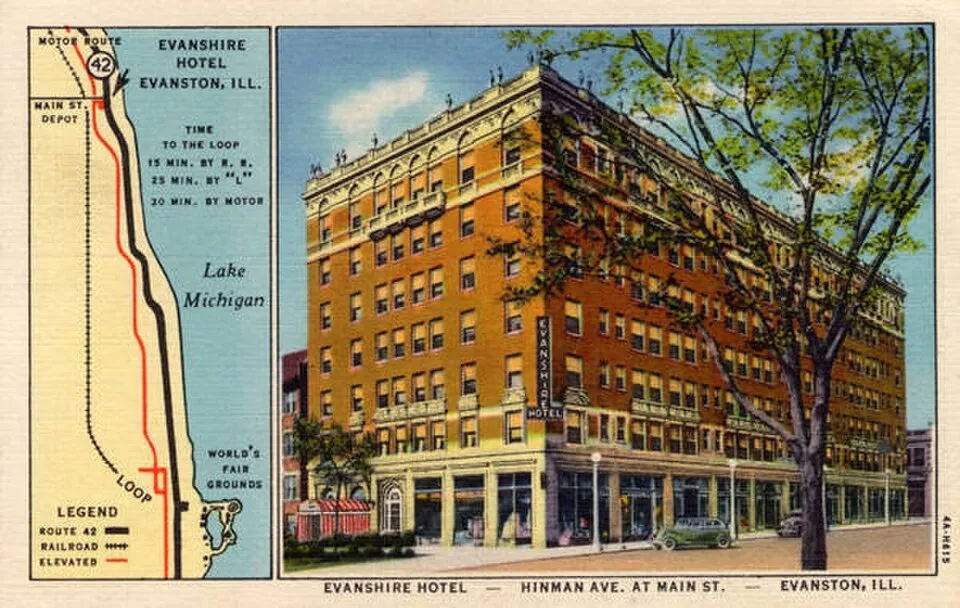
Throughout the 20th century, Evanston continued to evolve, balancing residential growth with the influence of the university and broader regional developments. The city maintained its reputation as a progressive and engaged community, fostering civic participation, education, and cultural life. By the mid-20th century, Evanston had firmly established itself as an important suburb of Chicago, offering a stable and dynamic environment for families, students, and professionals alike.
Today, Evanston stands as a vibrant and dynamic city that reflects both its historical roots and contemporary life. Its long-standing connection to Northwestern University continues to shape its cultural and intellectual character, attracting a diverse community of residents and students. The city’s historical development—from a planned suburban settlement to a retreat for Chicago’s affluent population—has left a lasting imprint on its urban fabric. This evolution is particularly visible in the city’s built environment, where each era of growth has contributed to a rich architectural tapestry. Understanding Evanston today provides essential context for exploring its distinctive architectural landscape.
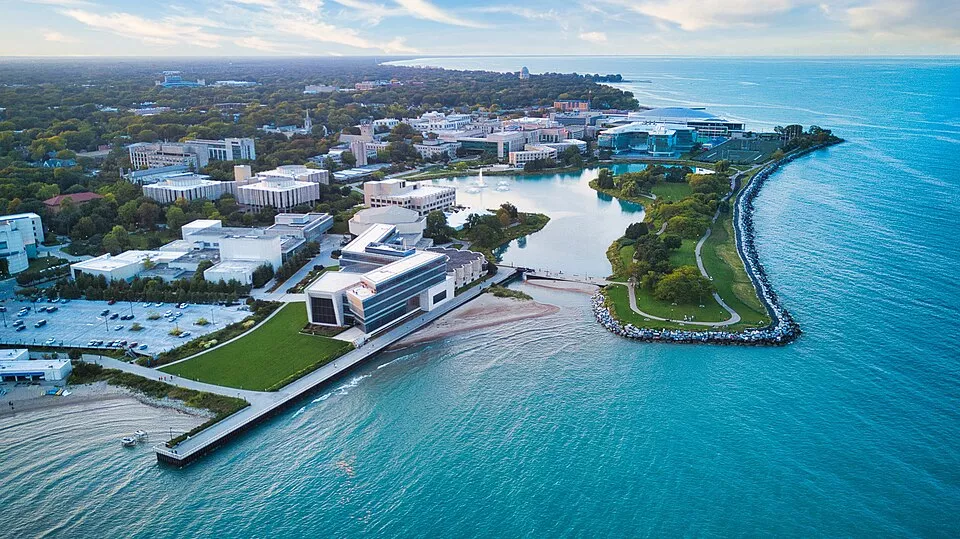
Architecture of Evanston – Overwiew
Evanston’s architectural landscape is marked by a rich diversity of styles, reflecting the city’s historical development and social character. Prominent among these are Prairie-style homes, influenced by Frank Lloyd Wright, emphasizing harmony with the environment. Victorian and Tudor Revival houses also appear frequently, a legacy of the city’s late 19th- and early 20th-century growth as a suburban retreat for affluent Chicagoans. Additionally, Colonial and Georgian-inspired residences highlight classical influences. This variety arises from Evanston’s evolution over time, blending tradition, cultural aspiration, and adaptation to changing tastes while preserving a cohesive urban identity.
It is worth noting that Evanston differs significantly from some of its neighbors in terms of building development. While in luxurious Kenilworth as many as 94.3% of buildings are single-family homes, in Evanston they account for only 32.1% of all properties. This is due to several factors, but mainly to the presence and influence of Northwestern University on the city and the degree of urbanization – which is much greater than in its northern neighbors. Therefore, the architectural styles we will discuss will, of course, refer to single-family homes, which are in the minority in Evanston.
Prairie Style
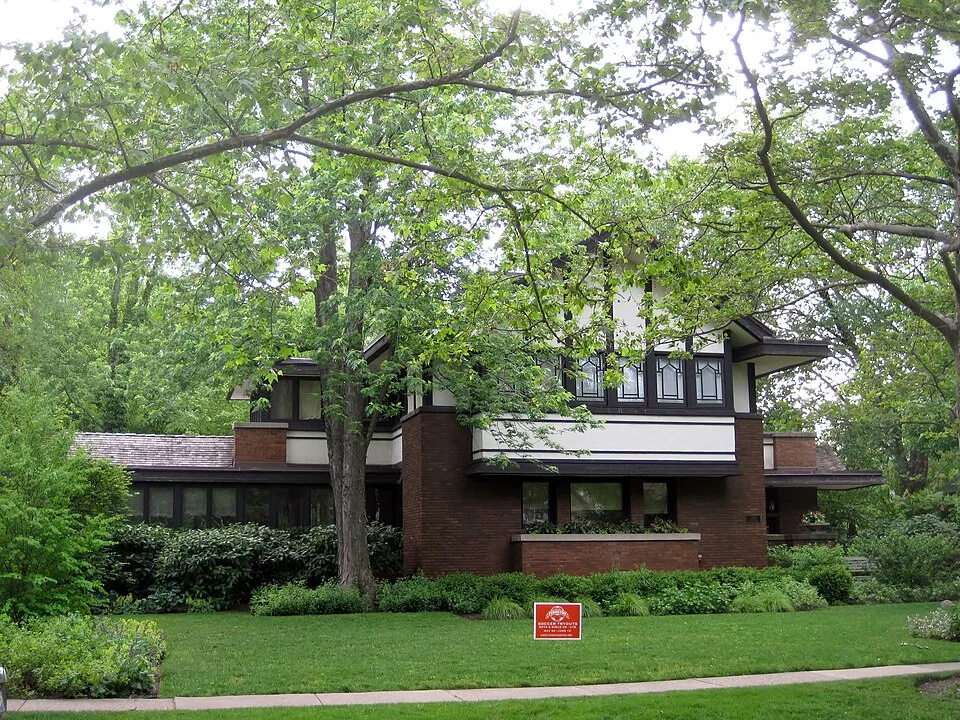
The Prairie Style, popularized by Frank Lloyd Wright, is one of Evanston’s most distinctive architectural influences. Buildings in this style emphasize horizontal lines, low-pitched roofs, and wide eaves, creating harmony with the surrounding landscape. Large windows and open interior spaces connect indoor and outdoor environments. This style became popular in the early 20th century, reflecting a desire for modern, functional homes that still respected nature.
Victorian Style
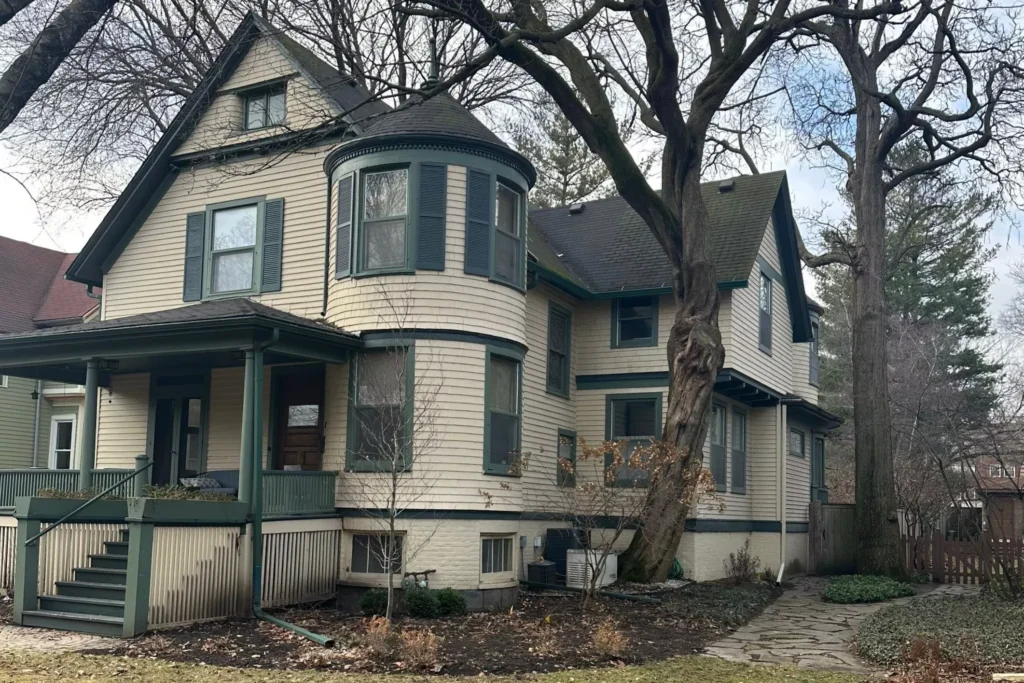
Victorian architecture in Evanston dates back to the late 19th century, when the city was growing as a suburban retreat. These homes are often ornate, with decorative trims, asymmetrical facades, and intricate woodwork. Tall windows and steeply pitched roofs are common features, giving the buildings a dramatic and elegant appearance. Victorian houses reflect the wealth and status of early residents, many of whom came from Chicago seeking summer or permanent homes.
Tudor Revival
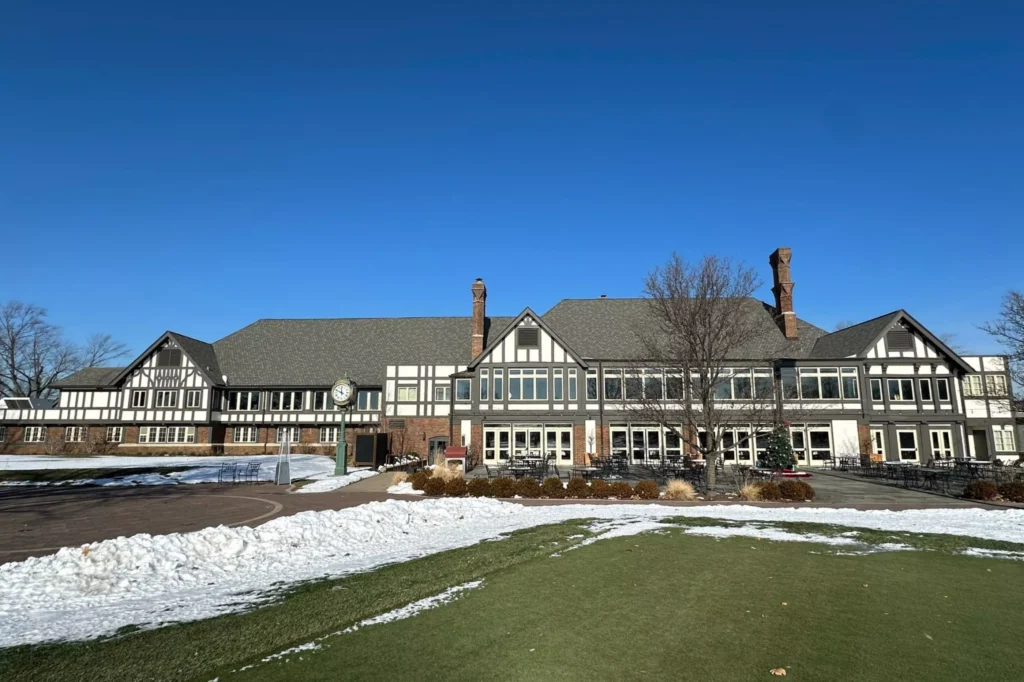
The Tudor Revival style gained popularity in Evanston in the 1920s and 1930s. Characteristic features include steeply pitched roofs, decorative half-timbering, and tall, narrow windows often with leaded glass. This style evokes a romanticized version of medieval English architecture, appealing to affluent residents seeking a sense of tradition and prestige.
Colonial and Georgian
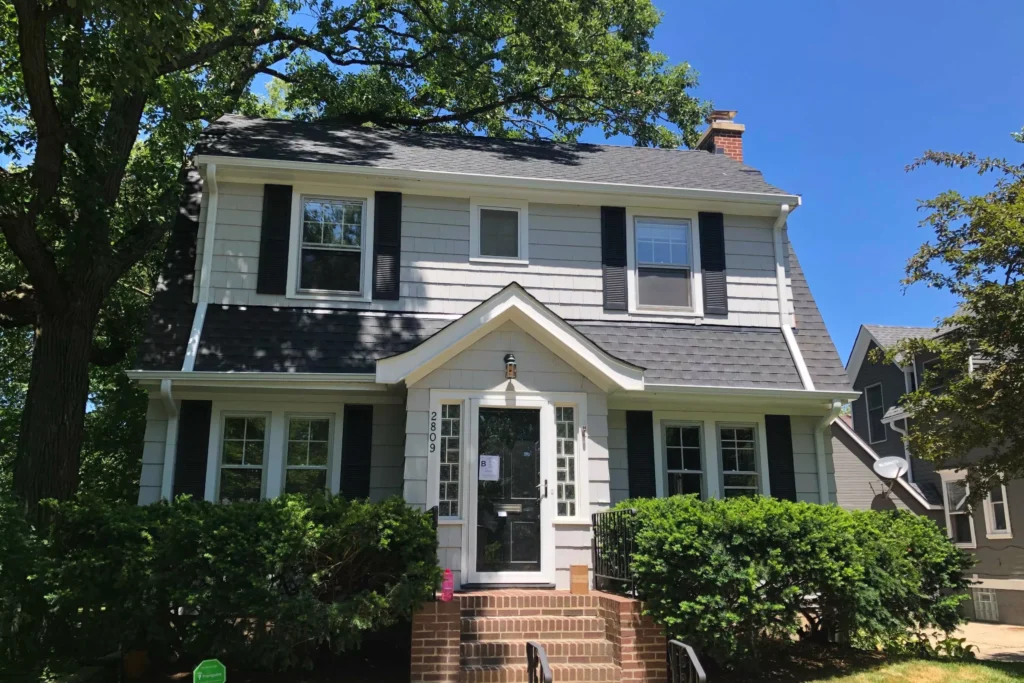
Colonial and Georgian-inspired homes reflect classical European influences and the appeal of symmetry and order. These residences typically feature brick facades, symmetrical windows, and decorative columns or pediments. Popular in the early 20th century, they were often built for families seeking timeless elegance and a connection to historical architectural traditions.
Property Prices in Evanston
The Evanston, IL real estate market in 2025 remains competitive, with homes selling quickly—often within 9 to 42 days—and frequently for over the asking price (Sale-to-List Ratio of 100.9%). However, the overall median price for all housing types, which sits around $419,000 to $460,000, is significantly lower than that of exclusive neighboring suburbs like Winnetka or Kenilworth.
This lower median is primarily due to Evanston’s diverse housing stock. While Evanston is a relatively affluent community, its city-like character means that a very large percentage of its residential units are condominiums, co-ops, and apartment buildings—properties that are significantly less expensive than single-family homes. The median price is, therefore, heavily weighted and pulled down by this high volume of multi-unit dwellings.
Crucially, available general market data, such as the median sale price for “all home types,” does not clearly isolate and show the price trend for single-family homes only. These detached houses, particularly in desirable areas, likely command prices much higher than the city’s overall median, offering a price point closer to its affluent North Shore neighbors.
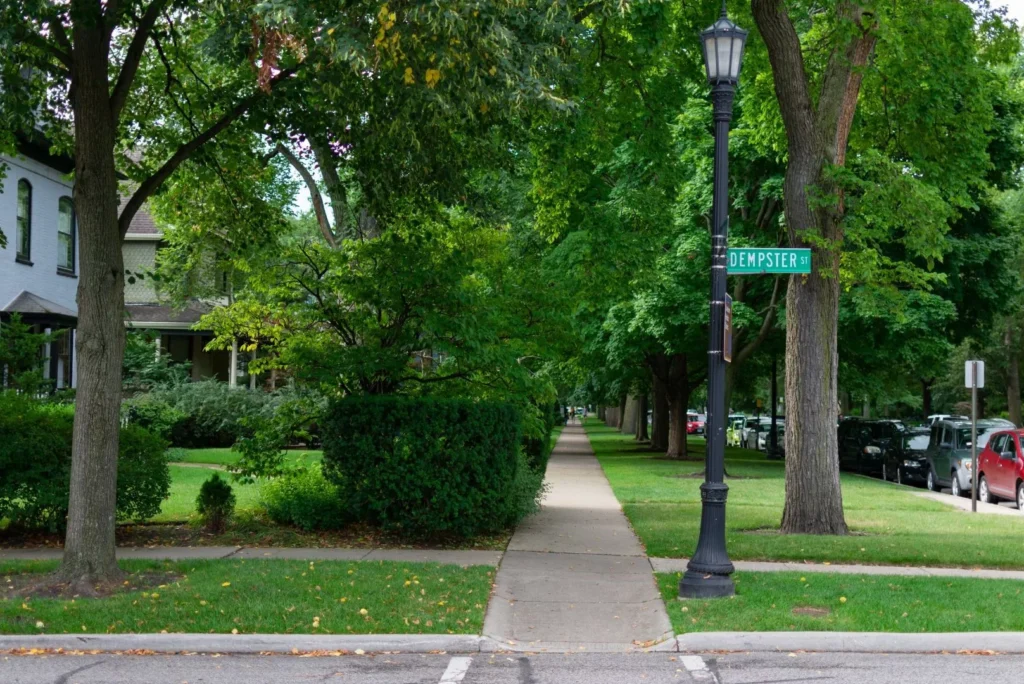
Let’s take a look at some specific examples of single-family homes in Evanston.
House for 500,000$ in Evanston
In Evanston, a home priced around $500,000 typically offers a balance between charm, comfort, and location. Buyers can expect a well-maintained single-family house or townhouse, often featuring two to three bedrooms and classic architectural details. Many properties in this range combine historic character—such as hardwood floors or original woodwork—with modern updates to kitchens and bathrooms. Neighborhoods are generally quiet, tree-lined, and close to parks, schools, and public transit.
A Milion Dollar House in Evanston
A buyer looking at a $1 million home in Evanston can expect a spacious and elegant property with high-quality finishes and a desirable location, often near Lake Michigan or Northwestern University. These homes typically feature four to five bedrooms, large living areas, and beautifully landscaped yards. Architecturally, they are often Tudor Revival, Colonial, or Prairie-style residences, showcasing original craftsmanship and distinctive design. Many have been carefully restored or modernized, combining historic character with luxurious contemporary amenities.
2 milion Dollar House in Evanston
A $2 million home in Evanston represents the upper tier of the city’s real estate market, offering exceptional space, location, and architectural distinction. Buyers can expect grand historic estates or newly built luxury homes, often situated close to Lake Michigan’s shoreline with scenic views and large private lots. These properties frequently feature five or more bedrooms, custom interiors, high-end materials, and extensive outdoor spaces. Architecturally, they often include Tudor Revival, Georgian, or contemporary designs, reflecting both Evanston’s heritage and modern sophistication. Such homes provide a unique combination of elegance, privacy, and timeless craftsmanship within one of the region’s most desirable residential settings.
The Most Expensive Properties in Evanston
This is a luxury estate priced at $3,995,000, combining historic origins with modern renovations. The home spans about 5,418 sq ft with 4 bedrooms and 6 bathrooms, and sits on approximately 0.38 acres of land. From the exterior, you see a commanding presence, with a stone tile roof, circular driveway, and elegant landscaping. Inside, the home offers open living spaces anchored by high ceilings, exposed wood beams, a grand fireplace, and custom finishes. The chef’s kitchen is top-tier, with premium appliances, a large island, and thoughtful details like a walk-in pantry and fine cabinetry. In addition, the lower level is finished for entertaining, including a custom bunk room, recreation areas, and spa-style amenities.
This is a historic granite Victorian mansion in Evanston, built in 1896, now listed for the first time in 50 years, with a price tag of $3.2 million. The property includes 11 bedrooms and 8 bathrooms within about 8,600 square feet of living space. Only two families have lived there since it was built, and many original features remain, such as wooden staircases, wainscoting, multiple fireplaces, and built-in organ pipes. Located on Ridge Avenue within the Evanston Ridge Historic District, the mansion was designed by architect Stephen A. Jennings and sits among other landmarked homes of Italianate, Queen Anne, and Prairie School styles. The home’s scale, materials, and legacy make it one of the most distinguished and highest-priced single properties currently on the market in Evanston.
This is a distinguished early-20th century home built in 1911, currently listed for $3,275,000 on a generous 0.70-acre lot. It was originally built for Swedish Ambassador Oscar Haugen and designed by architect Augustus Nyden, and later received an Evanston Preservation Award. The house retains many original features — hardwood floors, ornate crown moldings, a barrel ceiling, grand fireplaces, and a shadowbox staircase — all preserved with care. Modern updates include a high-end kitchen with Subzero, Wolf and Miele appliances, a large island, and contemporary comforts such as multiple HVAC units, tankless water heaters, and a restored carriage house with a two-bedroom apartment above. The property is located in a prestigious neighborhood, close to Lighthouse Beach, Northwestern University, top-rated schools, dining, culture, and local amenities.
Why Are Property Prices in Evanston so High?
The City’s Reputation
Evanston is one of those Chicago suburbs that are considered extremely prestigious and elite. Although it is not the most expensive on the North Shore (unlike Winnetka or Glencoe), it definitely stands out from other towns in the area due to its very distinctive blend of a prime location, the presence of a major academic institution, historical significance, and a European feel.
One of the most important factors here is the aforementioned academic institution, Northwestern University, located in the northeastern part of the city on Lake Michigan. This institution was founded in 1851 and currently educates approximately 15,000 students. The university is one of the most prestigious institutions in the U.S., ranking 7th among the best universities in the U.S. and 42nd in the QS World University Rankings.
The presence of such an institution in the city has a significant impact on its prestige. It ensures a steady influx of high-society figures, such as professors, scientists, doctors, and entrepreneurs, and gives the city an elite, academic character combined with an atmosphere of old-money intellectual wealth.
As for K-12 education, public schools are generally good, though opinions tend to be more mixed than in ultra-elite suburbs like Winnetka or Wilmette. Nevertheless, they are still considered a good educational environment, where there is a strong emphasis on education and social integration. Statistically speaking, Evanston residents are highly educated.
Character of the Development and Location
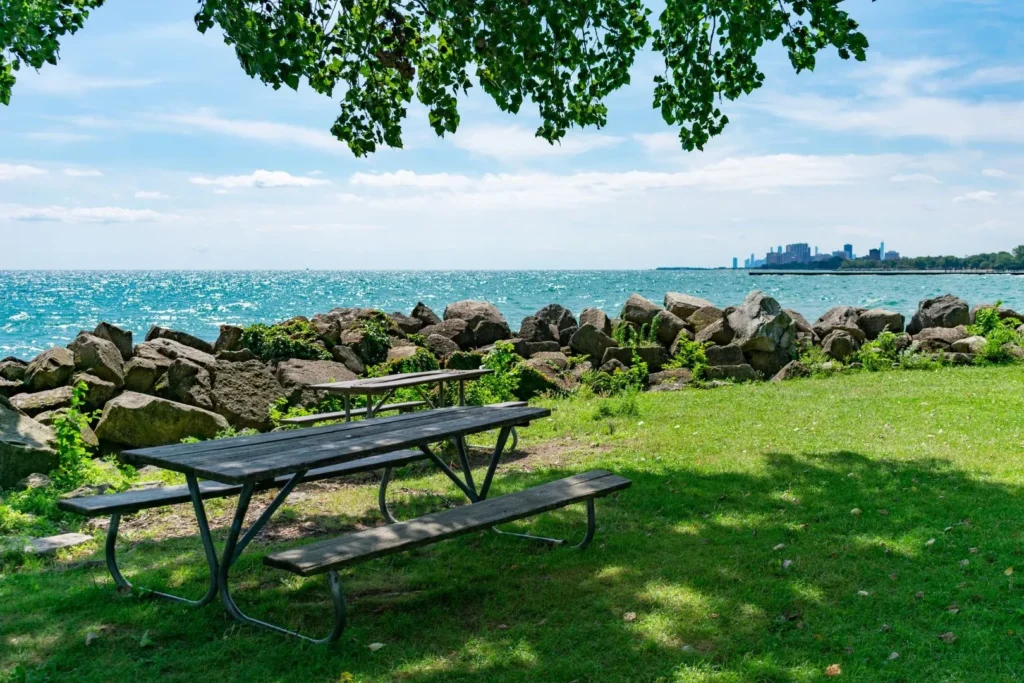
A city’s location plays a very significant role in its prestige—Evanston lies directly on Lake Michigan and borders Chicago itself. This location offers residents a high-end suburban lifestyle combined with proximity to a major metropolis.
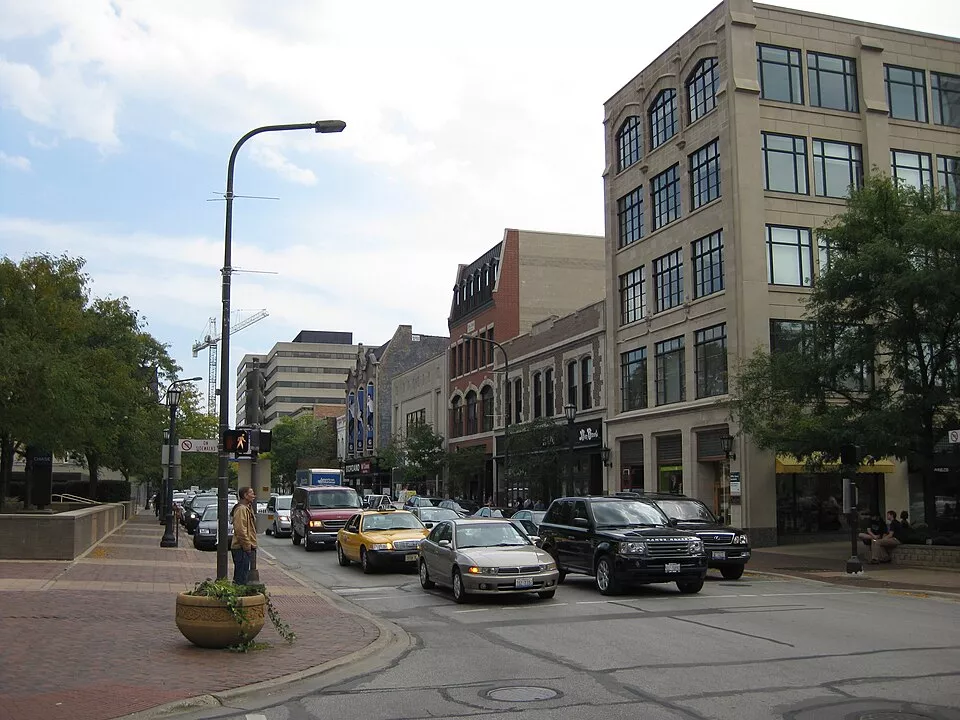
An interesting feature of Evanston is its walkable nature. Unlike neighboring towns, Evanston has centers featuring shops, restaurants, cafes, and other service establishments. As a result, many daily errands can be run on foot or using public transportation. This is quite rare in the suburbs, as they typically feature very low building density combined with large lots and a lack of distinct central areas.
The “European feeling” mentioned earlier doesn’t exactly mean that the city looks European, but rather that its urban model is similar to European cities in terms of high building density and the role played by central streets. These streets are lined with old townhouses that serve both residential and commercial purposes, offering retail spaces on the ground floors. In Evanston, students and residents can thus lead a lifestyle that is not necessarily possible in other Chicago suburbs.
Limited Supply
A key factor driving real estate prices in Evanston is the city’s severely limited supply. The city is already virtually fully developed, making it impossible to simply purchase a plot of land to build a house. Therefore, the only option for buying a home is to purchase an existing house or apartment, which is also not easy due to low owner turnover—homes in Evanston have been occupied by families for generations and are rarely sold on the open market.
Added to this are zoning regulations and neighborhood preservation, which are the most critical elements of urban planning in Evanston. Most areas are designated exclusively for single-family homes, which prevents the construction of projects that could accommodate more people. Additionally, most areas have building height restrictions that prevent the construction of apartment buildings. Given these factors, combined with the city’s lack of room to expand, urban development here is extremely difficult.
Is Evanston a Good Place to Live?
Evanston is an example of a location that many would describe as “ideal” for everyday life. The city’s location between the lake and Chicago offers residents the tranquility typical of the suburbs combined with very convenient access to the big city; the presence of a prestigious university and an elite community keeps real estate prices high and ensures the city’s safety, while its academic character gives it a unique atmosphere. People who have moved to Evanston in the past always emphasize that the locals are more open and talkative than they expected, and that it is easy to become part of the local community. However, it’s worth noting that some people my consider the architecture of Kenilworth of Winnetka as more inviting. Due to their size, these two villages are also worth opting for!