
When planning a roof replacement, homeowners usually compare quotes from several roofing companies in their area. The estimates often differ significantly, sometimes by as much as 20 or 30 percent. Many people assume that these price differences come only from the contractor’s profit, but that is not the case.
One of the ways roofing contractors cut corners is by not using an ice and water shield. In this article, we will explain whether an ice and water shield is necessary, what happens if it is not installed, and why it is worth using this type of membrane.
Table of Contents
What is an Ice And Water Shield?
Ice and water shield is a type of self-adhesive roofing membrane designed to create a waterproof barrier on your roof. It is typically made from a combination of rubberized asphalt and a strong, flexible backing material. This combination allows the membrane to adhere directly to the roof deck, forming a continuous layer that resists water infiltration.
Unlike traditional roofing underlayment, ice and water shield is designed to seal around nails and fasteners, providing additional protection in areas where moisture might otherwise penetrate. It usually comes in rolls, making it relatively easy to apply along roof edges, valleys, and other critical points where water may accumulate.
The membrane is highly flexible and can conform to roof contours, allowing it to cover irregular surfaces effectively. It is also durable and able to withstand temperature changes, as well as the natural expansion and contraction of roofing materials over time. Many homeowners choose it for high-risk areas such as eaves, valleys, chimneys, and skylights, although it can also be applied across the entire roof deck.
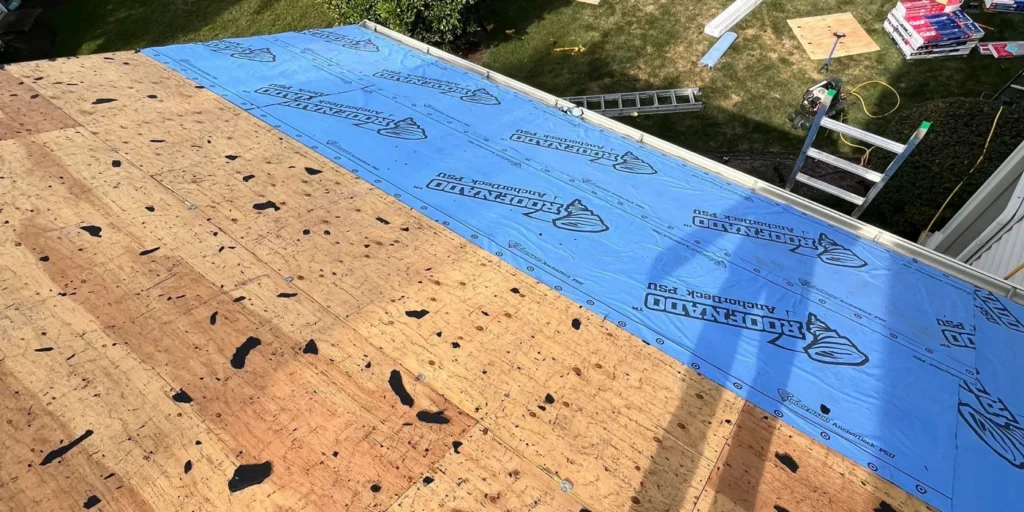
Installation typically involves peeling off a protective backing and pressing the adhesive layer onto a clean, dry roof surface. Once in place, the ice and water shield creates a smooth, adhesive layer that works together with shingles or other roofing materials, forming a secondary barrier against water intrusion.
Ice and water shields are generally much more durable than traditional underlayment, primarily due to their thickness and structure. The rubberized asphalt composition allows them to withstand temperature fluctuations, snow pressure, ice buildup, and nail penetration. On the other hand, ice and water shield is significantly more expensive than synthetic felt.
Are There Situations When Installation of Ice and Water Shield is Necessary?
Just as GAF states, ice and water shield is a necessary component of every roof in mild and cold climates. This is due to its primary role in preventing ice dams and water backup. Whenever there is an increased risk of leaks, an ice barrier is needed, or at least strongly recommended.
However, even in warmer climates such as California, contractors still use it, mainly to protect roof valleys. The soft, rubberized structure of ice and water shield provides excellent sealing properties, allowing it to fill micro-cracks that may form due to hail damage, UV exposure, and repeated freeze-thaw cycles.
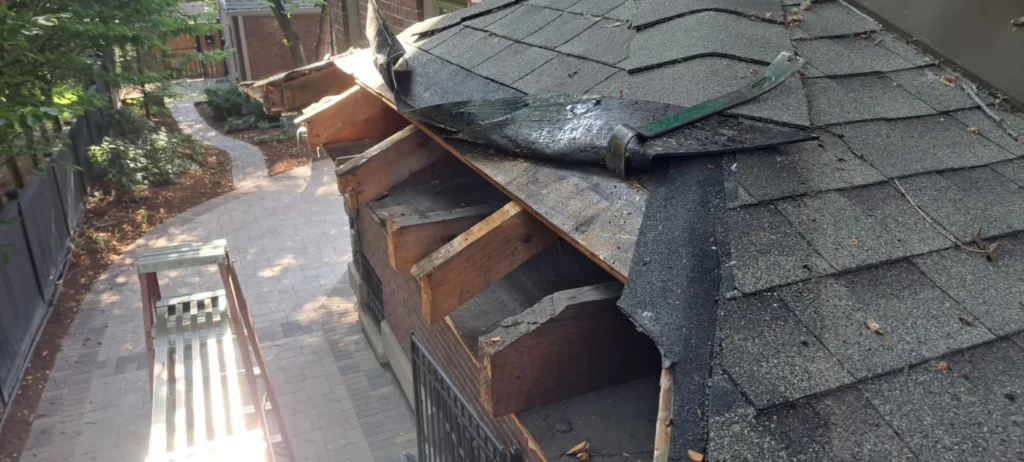
As the best roofing contractor in Chicagoland, we use ice and water shield in most of our projects. Without this membrane, the roofs we install would deteriorate and leak much faster. The local climate has a significant impact on all roofing materials, including GAF shingles, which are commonly considered durable. Hot summers, freezing winters, regular hailstorms, and relatively high humidity due to the proximity of Lake Michigan all pose a serious risk to improperly protected roofs.
To sum up, if you live in an area with snowy winters, rainy seasons, or if your roof has valleys, you should most likely use ice and water shield to protect the most vulnerable areas. According to our internal standards, we always use an ice barrier membrane to protect:
- Eaves – 24″ inside the warm wall line, typically resulting in 48″ of ice and water shield along the eaves;
- Valleys;
- Roof-to-skylight connections;
- Roof-to-chimney connections;
- Roof-to-wall transitions.
In addition, we cover the entire roof surface with ice and water shield when the roof slope is 4/12 or lower.
Do I Need to Install Ice And Water Shield Over The Entire Roof Surface?
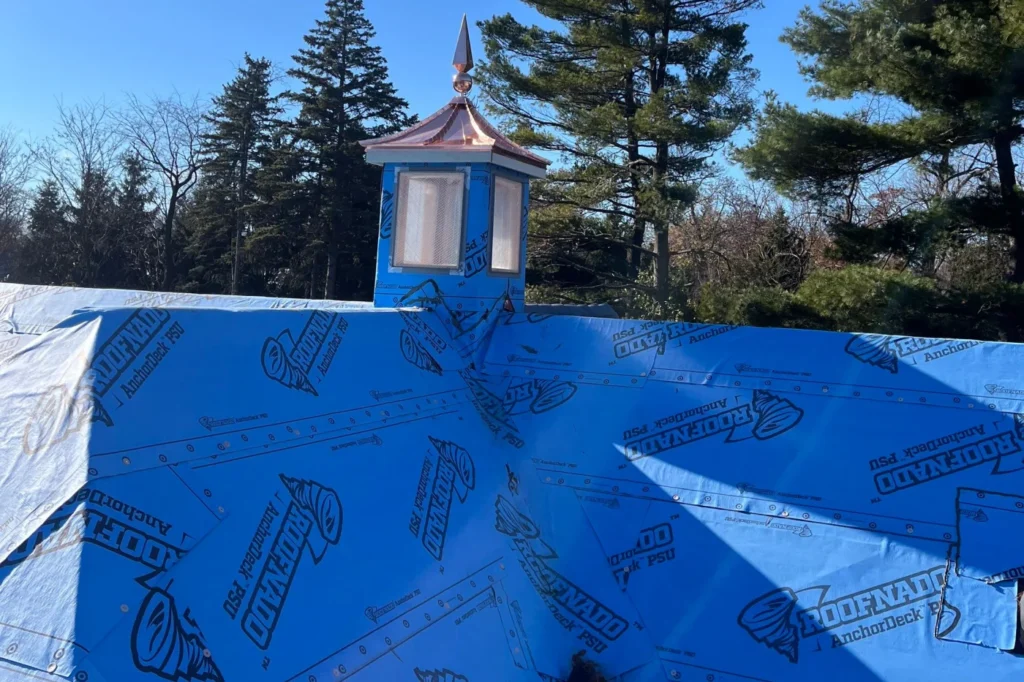
While ice and water shield is most critical along roof edges, valleys, and other high-risk areas, the question often arises whether it should cover the entire roof deck. Technically, building codes such as the International Building Code (IBC) only require its installation in areas prone to ice dam formation, generally the lowest 24 inches of roof eaves and, in some cases, valleys or around penetrations.
However, some homeowners and roofers consider covering the entire roof surface with this membrane. While it may seem like a good way to extend the lifespan of the roof by reducing the risk of leaks, it is generally not recommended. Since ice barrier adheres directly to the sheathing, it can negatively affect ventilation. Moisture may become trapped in the plywood and under the shingles, preventing proper airflow. This can lead to mold and rot, creating a potential health hazard.
It is also worth noting that it is very unlikely for a roof to start leaking in the middle of a slope. The vast majority of leaks occur in valleys, near the eaves, or around roof penetrations.
Can I Install Ice and Water Shield Without Underlayment?
Technically, it is possible to install ice and water shield only in vulnerable areas and leave the rest of the sheathing without underlayment. Although this is definitely a better approach than not using any type of underlayment at all, it is still not a good idea.
Every shingle, regardless of the material it is made of, can fail over time. Without underlayment, the risk of leaks increases significantly.
Why Do Roofing Contractors Avoid Using Ice and Water Shield?
Honestly, it all comes down to cost. While high-quality synthetic underlayment costs approximately $10–$12 per square (100 sq ft), ice and water shield costs at least $50 per square. On a typical roofing project, using felt instead of an ice barrier can save a contractor at least $300. In an environment of tight margins, high competition, and clients watching every dollar, that $300 can sometimes determine whether a contractor wins the job.
Apart from cost, there are other reasons behind this approach. Some contractors believe that ice and water shield does not effectively prevent ice dams, while others think that bitumen-based membranes can lead to mold. Regardless of the reasoning, these concerns are often overstated. If you live in the Midwest, we strongly believe that using ice and water shield properly is simply a matter of common sense.
Summary
Deciding whether to install Ice and Water Shield is a critical step in protecting a home, especially in regions like Chicagoland where harsh winters and fluctuating temperatures are common. While building codes may only require the membrane in certain areas, such as roof edges and valleys, extending its coverage across the entire roof offers added security against leaks, ice dams, and water intrusion. Skipping underlayment or installing the shield incorrectly can lead to costly repairs, structural damage, and potential legal complications. Additionally, proper compatibility with roofing materials, attention to installation details, and adherence to manufacturer guidelines are essential for long-term performance. Ultimately, investing in Ice and Water Shield is not just about compliance or avoiding immediate problems—it’s about ensuring a durable, well-protected roof that can withstand both the climate and the test of time.